Hi, what do you want to do?






Curated OER
Texas Estuary Project
Students practice the proper lab techniques of coring, seining, taking temperatures, and salinity. Students analyze and graph data. Students write a 3 part essay and correctly draw and label a food web of their field site.

The Wild Classroom
The Wild Classroom: Biomes of the World: Estuaries Biome
Learn about estuary ecosystems. Find out about plants, animals, adaptations, and conservation efforts.
NOAA
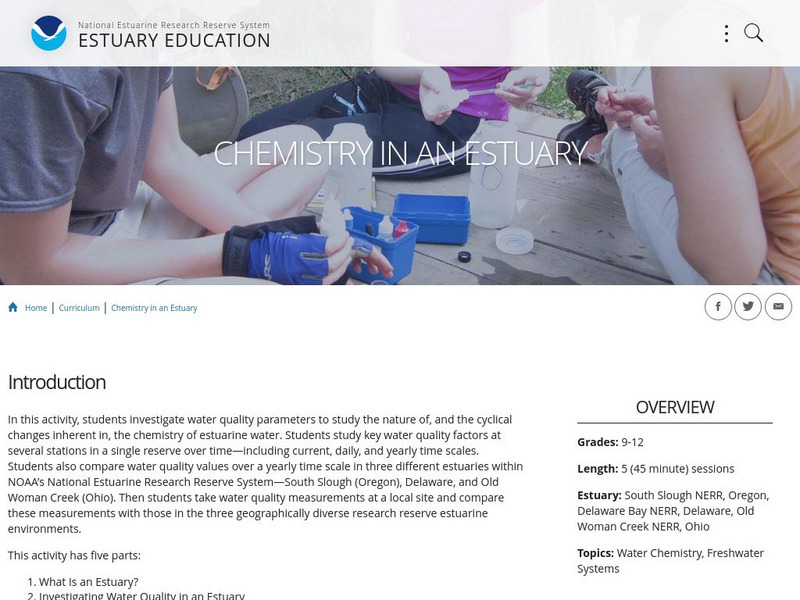
Noaa: Estuaries 101 Curriculum: Chemistry in an Estuary
This activity introduces students to the complex chemistry of estuarine water. Students investigate how chemical and physical water quality factors-pH, temperature, dissolved oxygen, and salinity-change and interact over varying time...
NOAA
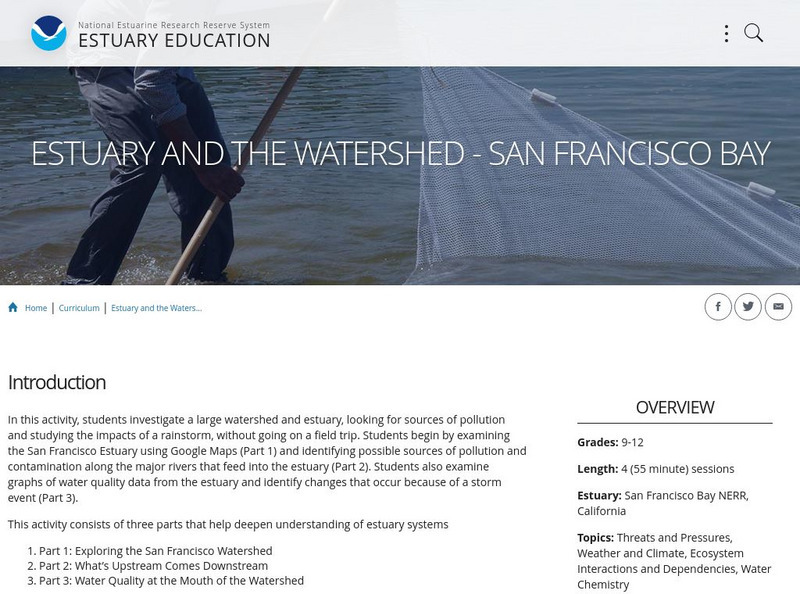
Noaa: Estuaries 101 Curriculum: Estuary and the Watershed San Francisco Bay
In this activity, students investigate a large watershed, look for sources of pollution in the watershed, and study the impacts of a rain storm on a watershed and estuary, without going on a field trip. Students investigate the nature of...
NOAA
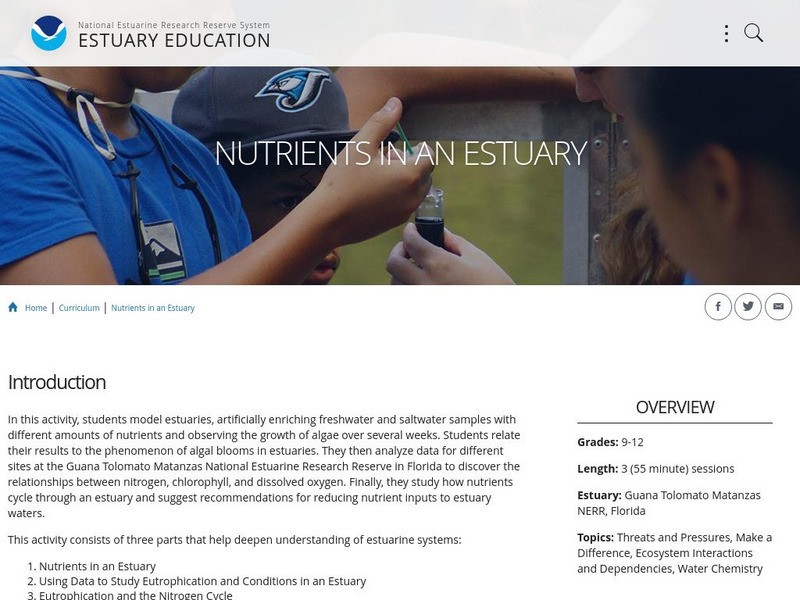
Noaa: Estuaries 101 Curriculum: Nutrients in an Estuary
An overload of nutrients, called eutrophication (Greek for "good-nutrition"), can be harmful to estuaries. This phenomenon is also referred to as "over-enrichment," or "nutrient pollution". Students will investigate the range of...
NOAA
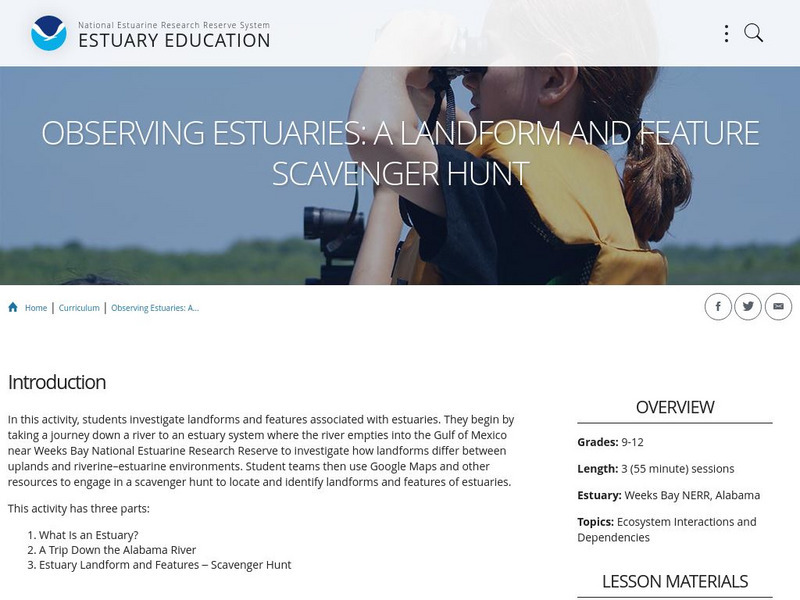
Noaa: Estuaries 101 Curriculum: Observing Estuaries:
Students investigate landforms and features associated with estuaries by taking a journey down a river to an estuary system where the river empties into the Gulf of Mexico near Weeks Bay. They will use Google Maps and other resources to...