Hi, what do you want to do?






Crash Course
Respiratory System (Part 2)
Hemoglobin which is red, carries oxygen in RBC, and is responsible for the color of our blood. Video 32 in a series of 47 focuses on how your blood exchanges oxygen and carbon dioxide to maintain homeostasis. Scholars see how hemoglobin...
Bozeman Science
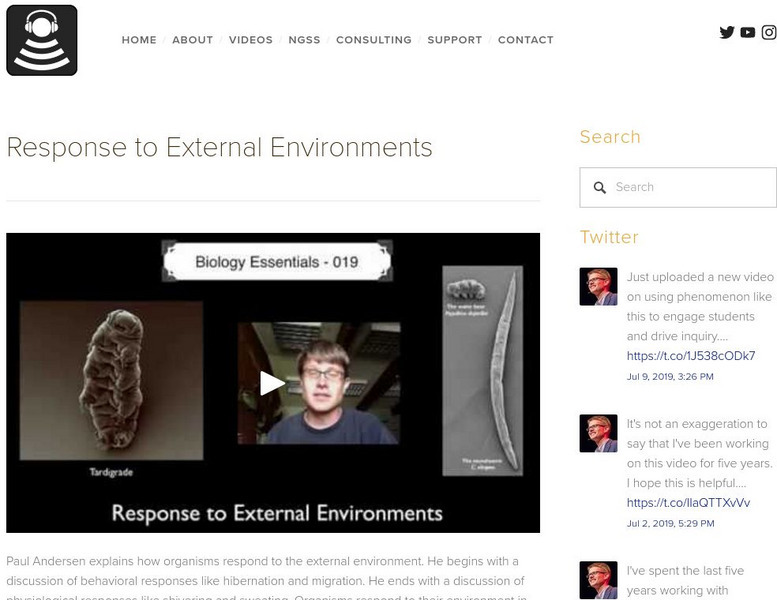
Bozeman Science: Response to External Environments
Paul Andersen explains how organisms respond to the external environment. He begins with a discussion of behavioral responses like hibernation and migration. He ends with a discussion of physiological responses like shivering and...
Sophia Learning
Sophia: 7 Characteristics of Life: Lesson 3
This lesson will introduce the 7 characteristics of all living things. It is 3 of 4 in the series titled "7 Characteristics of Life."
Sophia Learning
Sophia: Homeostasis: Lesson 2
This lesson will explain the process of homeostasis and how it allows organisms to maintain a stable internal environment. It is 2 of 10 in the series titled "Homeostasis."

Bozeman Science
Bozeman Science: Positive and Negative Feedback Loops
Paul Andersen explains how feedback loops allow living organisms to maintain homeostasis. He uses thermoregulation in mammals to explain how a negative feedback loop functions. He uses fruit ripening to explain how a positive feedback...
Bozeman Science
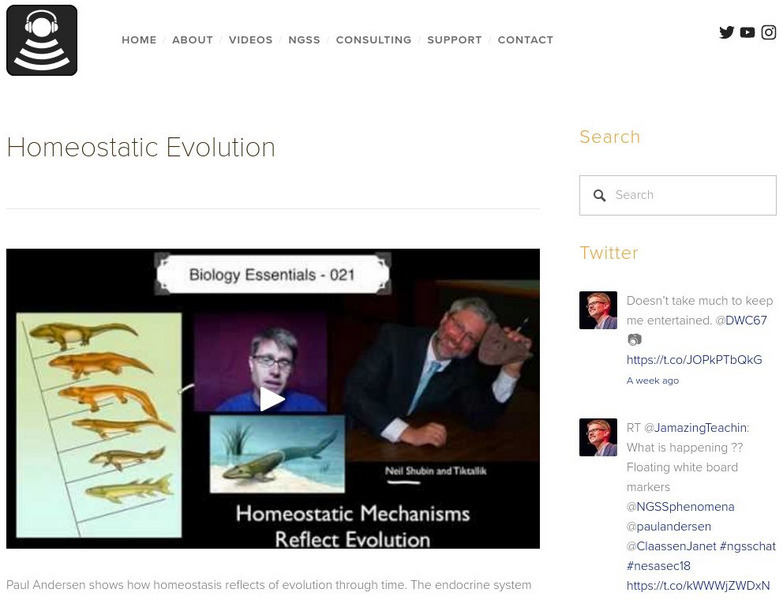
Bozeman Science: Homeostatic Evolution
Paul Andersen shows how homeostasis reflects of evolution through time. The endocrine system shows continuity through flatworms, earthworms and vertebrates. However the respiratory system shows change as organisms move onto land. The...
Bozeman Science
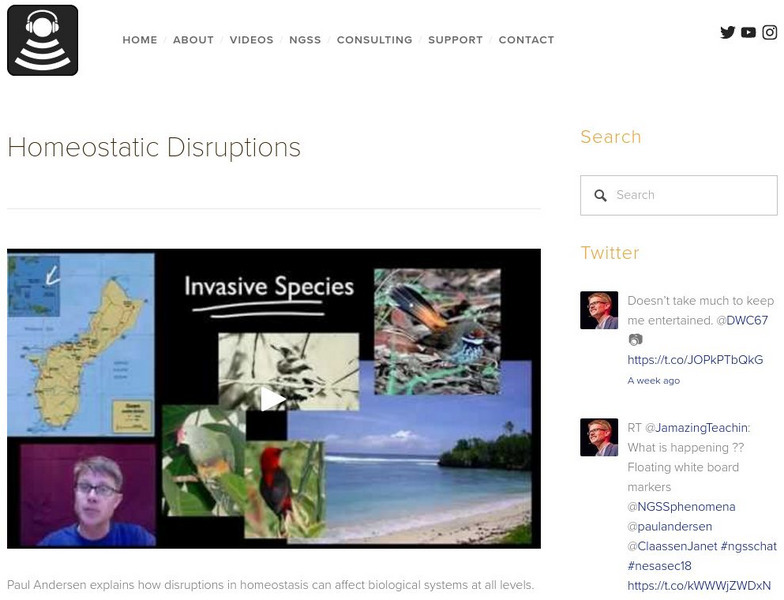
Bozeman Science: Homeostatic Disruptions
Paul Andersen explains how disruptions in homeostasis can affect biological systems at all levels. He uses the example of dehydration in animals to explain how disruptions at the cellular level can affect an organism.
Bozeman Science
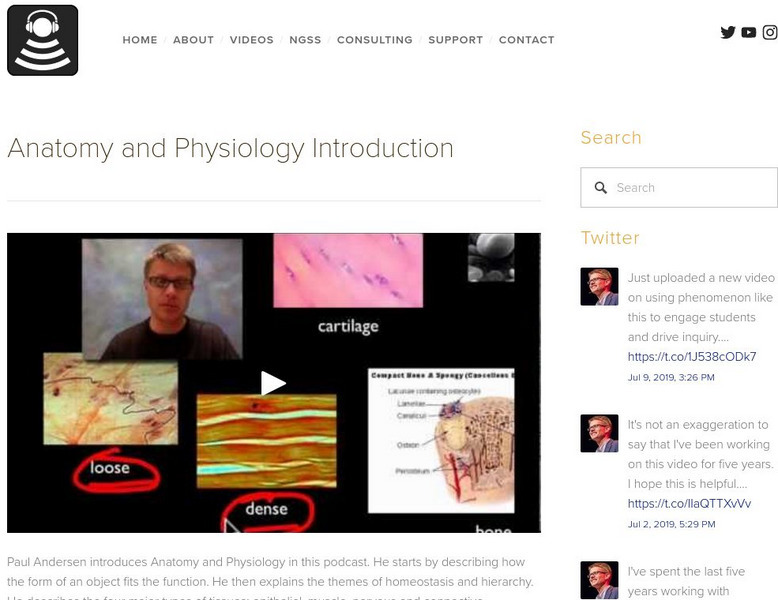
Bozeman Science: Anatomy and Physiology Introduction
Paul Andersen introduces Anatomy and Physiology in this podcast. He starts by describing how the form of an object fits the function. He then explains the themes of homeostasis and hierarchy. He describes the four major types of tissues;...