Hi, what do you want to do?






Curated OER
Biodiversity: El Imposible National Park, El Salvador
Fifth graders explore the concept of how the more diverse an ecosystem is, the more interdependence of species exists within that system. The complex relationships among diverse species are difficult to identify. As species disappear or...

Curated OER
Surviving in Our Ecosystems
Third graders identify the characteristics of a frog and compare them to a human child. They draw and describe the best environment for a human to live in and the best environment for a frog to live in based on their physical...

Curated OER
Taxonomy
Students work together to identify groups of endangered animals. Using a pamphlet, they group the pictures according to specific criteria and cut the pictures out and color them. They place the animals in the correct habitat and share...

Curated OER
Creating a Multimedia Presentation
Students are divided into teams to make a presentation about their state. Each team is responsible for making one part of the presentation. At the end, all parts are combined to make one complete presentation. While creating the...

Curated OER
Tracking in Wisconsin
Students examine how to identify the tracks and track patterns of some common Wisconsin animals. They examine how the footprints of these animals reveal how different feet help different animals navigate the winter snow or survive in...

Curated OER
Animal Habitats and Their Management
Students review components present for a quality animal habitat and then explore a goose pond to find out what animals reside there. They learn how wildlife managers work with the land so everything can co-exist together.

Curated OER
Whales
Write factual accounts, reports and express personal viewpoints about whales. They eill also write on a variety of topics related to whales, shaping ideas and making choices in language and form.

Curated OER
"Go Batty"
Students make a bat from a paper tube. They suspend bats from the ceiling or create a "cave" from black construction paper on a bulletin board or wall. Have students help you! Tape or staple student made bats in the "cave" to stress to...

Curated OER
Who Has Denser Fur?
In this mathematics worksheet, students identify and solve who has the denser fur, either the Sumatran tiger or the sea otter. They calculate the number of hairs for each per inch or per meters and compare them.

Curated OER
Classification of Living Things
In this biology worksheet, students identify and locate various vocabulary terms relating to the classification of living things. There are 28 biology terms located in the word search.

Curated OER
Water Quality
In this water worksheet, students determine the factors that effect the solubility of gases, calculate the percent concentration of solutions, and give the balanced chemical equation for photosynthesis. This worksheet has 18 short answer...

Curated OER
The Digital Cat-A Purrfect Solution!
Students explore anatomy through digital photography. In this digital art lesson, students create a portfolio of various animals and label the structures of each.

Encyclopedia of Earth
Encyclopedia of Earth: Evolutionary Biology: Mammal
Article explaining the basic characteristics of mammals, their diet, reproduction, behavior, conservation concerns, taxonomy, and their evolution. (Published: September 23, 2010)
CK-12 Foundation
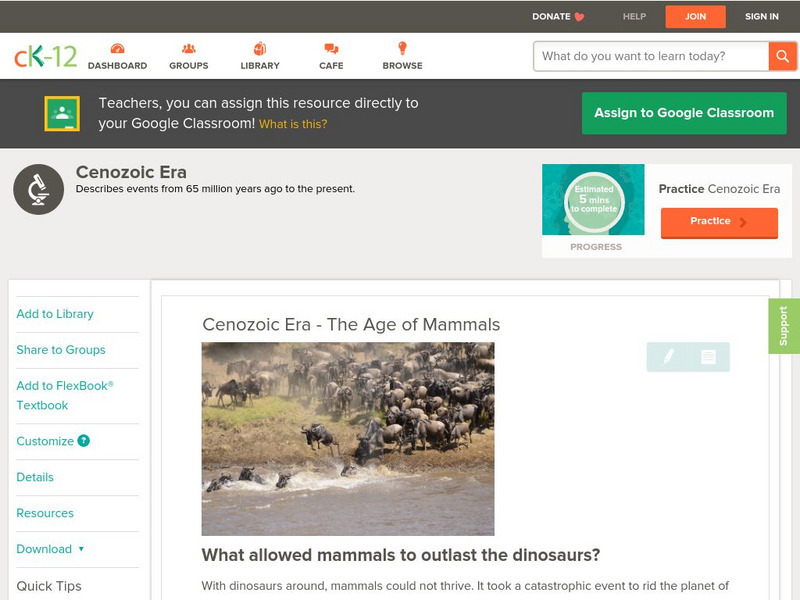
Ck 12: Biology: Cenozoic Era the Age of Mammals
[Free Registration/Login may be required to access all resource tools.] Covers the Cenozoic Era, the age of mammals.
Canadian Museum of Nature
Canadian Museum of Nature: Natural History Notebooks
This site from the Canadian Museum of Nature, a natural history museum, provides short information blurbs and fun facts on over 240 different common animals categorized by type (mammals, fish, reptiles, invertebrates, amphibians,...
PBS
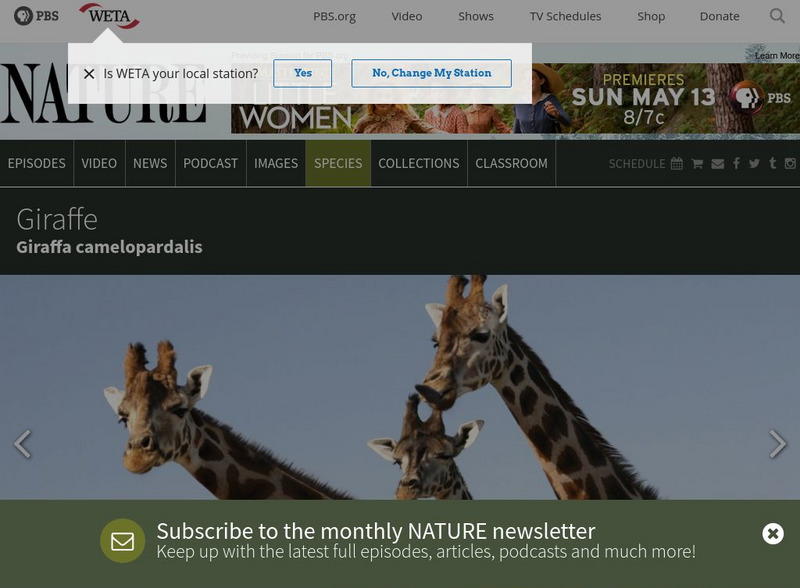
Pbs Nature Critter Guide: Giraffe
Did you know that giraffes are vegetarians? You can find out some more interesting facts and information about giraffes when you visit this resource.

PBS
Pbs Nature: Zebra
Learn about the natural history of the zebra in text and images, a relative of the horse that inhabits the Serengeti in East Africa and other parts of Africa.
PBS
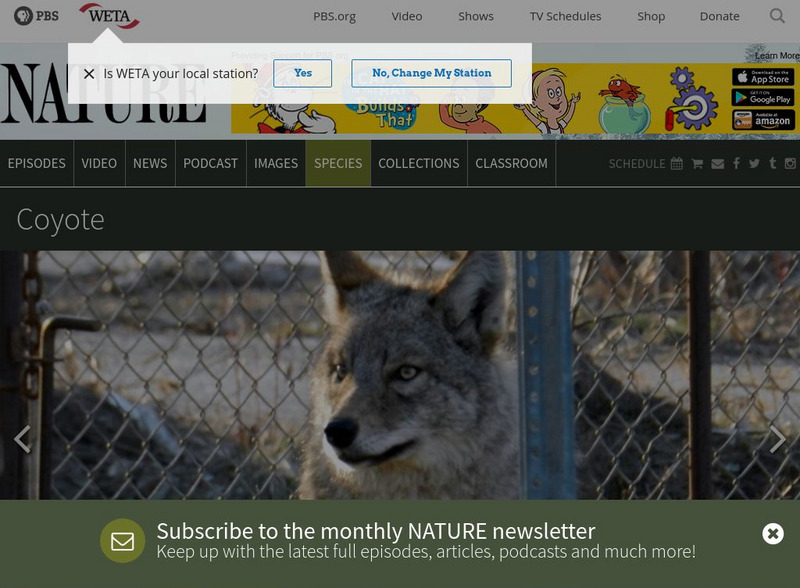
Pbs Nature: Coyote
What do you know about coyotes? Learn more about how adaptable this animal is to new surroundings when you check out this informative resource. Explore this website to find more facts and information ranging from what these animals eat...
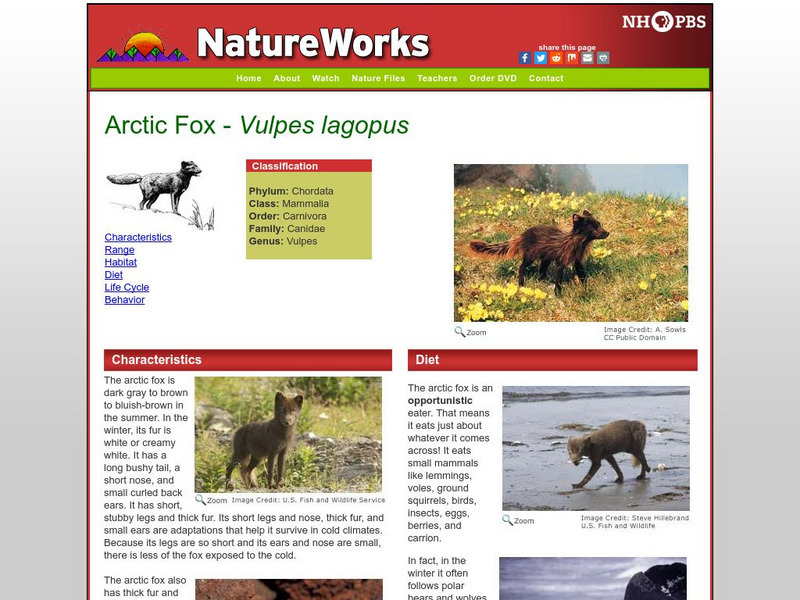
PBS
Nh Pbs: Nature Works: Arctic Fox
Learn more about the arctic fox through this clear and concise site. This resource features photos, characteristics, behavior information and more about this fascinating mammal.
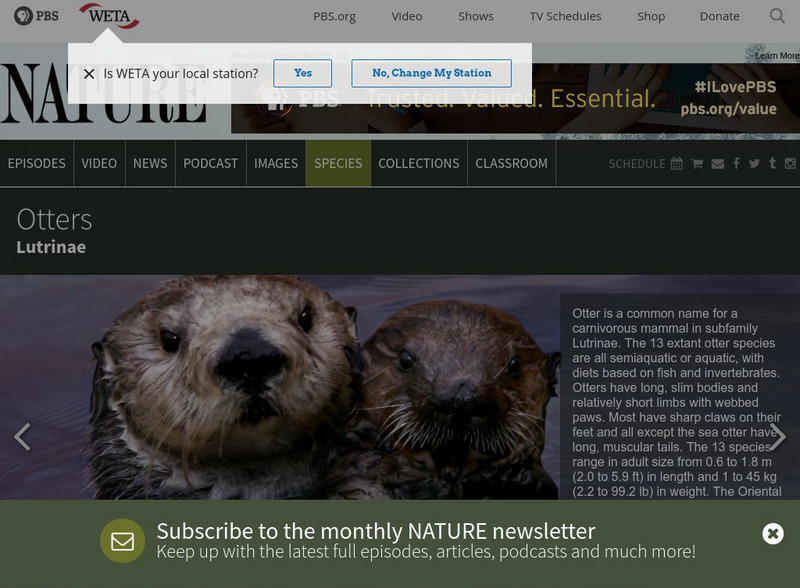
PBS
Pbs Nature: Otters
Discover more about how otters live, what they eat and how they socialize when you visit this informative resource. This condensed site will benefit students who need help narrowing their research information.

Oxfam
Oxfam's Cool Planet: Animals of the Desert
Resource looks at the different types of insects, mammals, reptiles, and birds found in the desert and the strategies they use for survival.
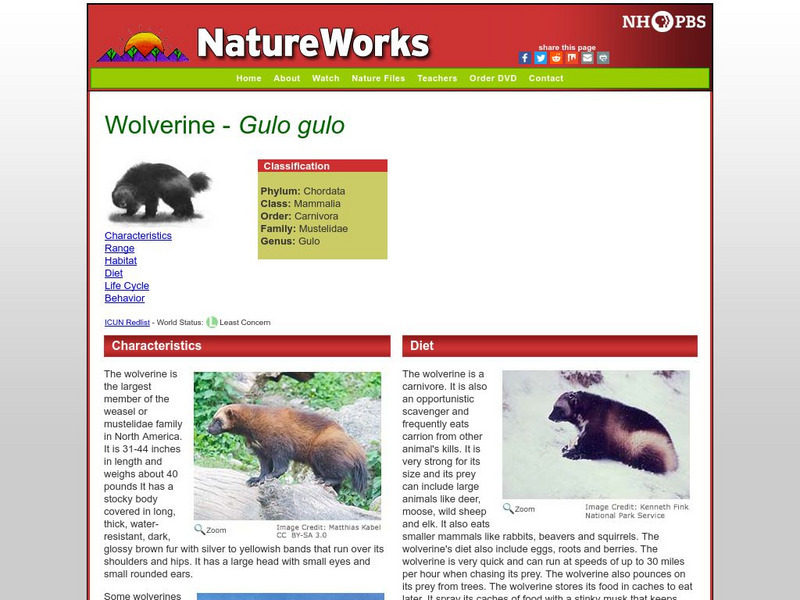
PBS
Nh Pbs: Nature Works: Wolverine
Study the world of the Wolverine when you explore this informative source. The content of this resource includes characteristics, life cycle, diet, habitat, behavior and more of this member of the mustelid family.
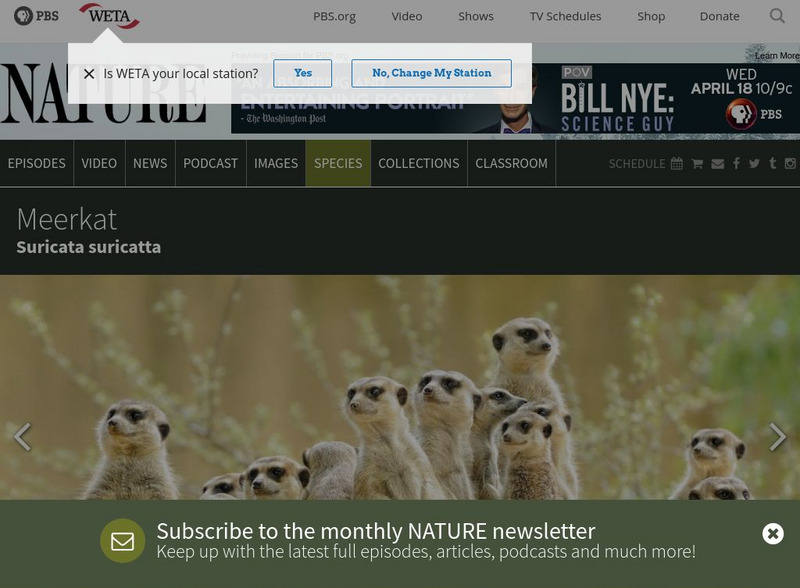
PBS
Pbs Nature: Meerkat
Do you know anything about meerkats? This site identifies where these mammals live, what they eat and other interesting facts. Meerkats are part of the mongoose family.
Other
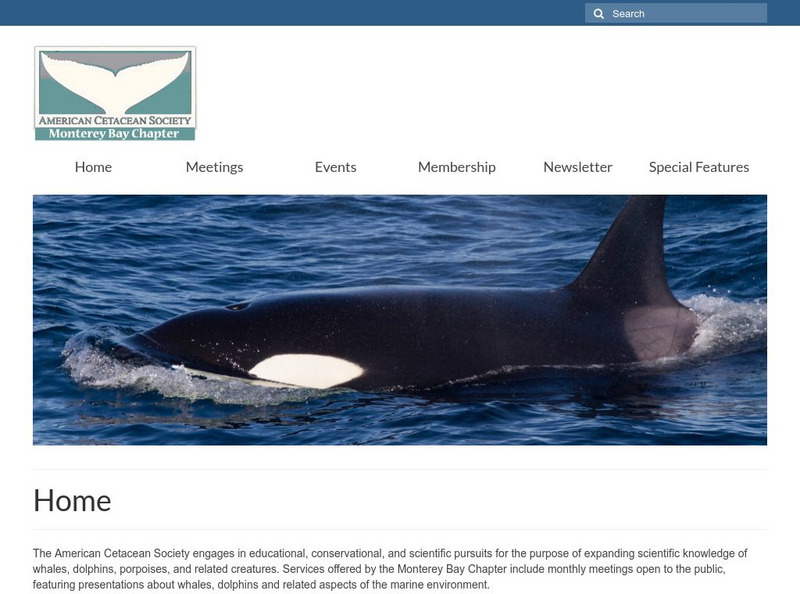
American Cetacean Society: Monterey Bay Chapter
This resource provides basic information about educational, conservational and scientific efforts in the Monterey Bay area.