


Internal Revenue Service
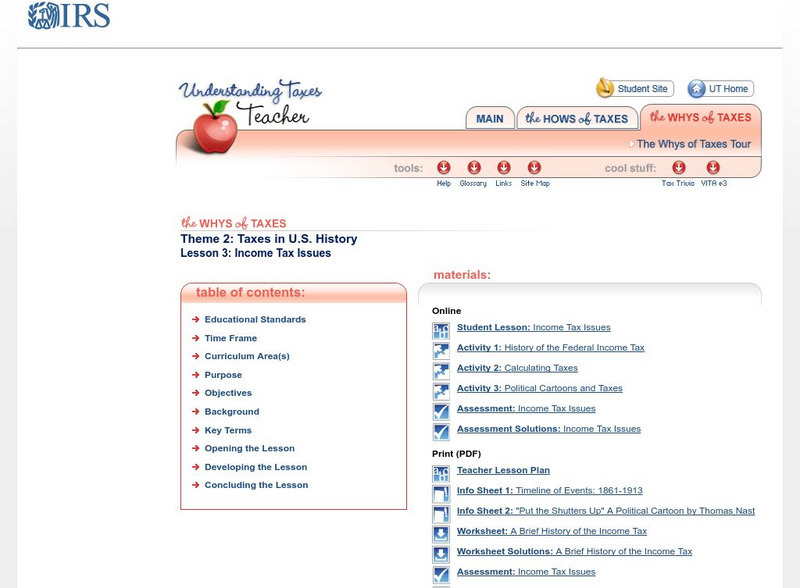
Irs: Income Tax Issues Lesson Plan
This lesson plan will help students understand how and why a federal income tax was implemented by Congress during the Civil War and in 1913.

Gilder Lehrman Institute of American History
Gilder Lehrman Institute: History Now: Anti Communism in the 1950s
[Free Registration/Login Required] An essay tracing the anti-Communist hysteria beginning in earnest at the end of World War II that resulted in Truman's federal Loyalty Security program and ending with McCarthyism in the 1950s.

Library of Congress
Loc: Born in Slavery
Transcripts of hundreds of oral histories and slave narratives from 1936-1938 collected during the Federal Writers' Project.
Other
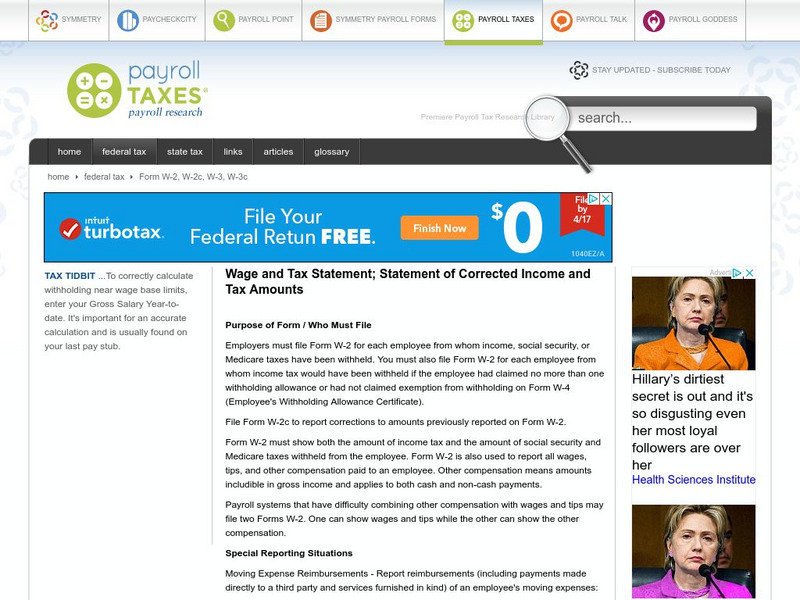
Payroll taxes.com:federal Payroll Tax Forms and Filing Addresses
This site explains the purpose of the W-2 form, special situations that affect it, and where and when to file it.

Digital History
Digital History: Indian Removal
The Indian Removal policy was inhumane and without empathy for the Native Americans who were forced from their lands. Read about the attempts to enforce federal treaties and the final removal of three major tribes from the Southeast.
University of Missouri
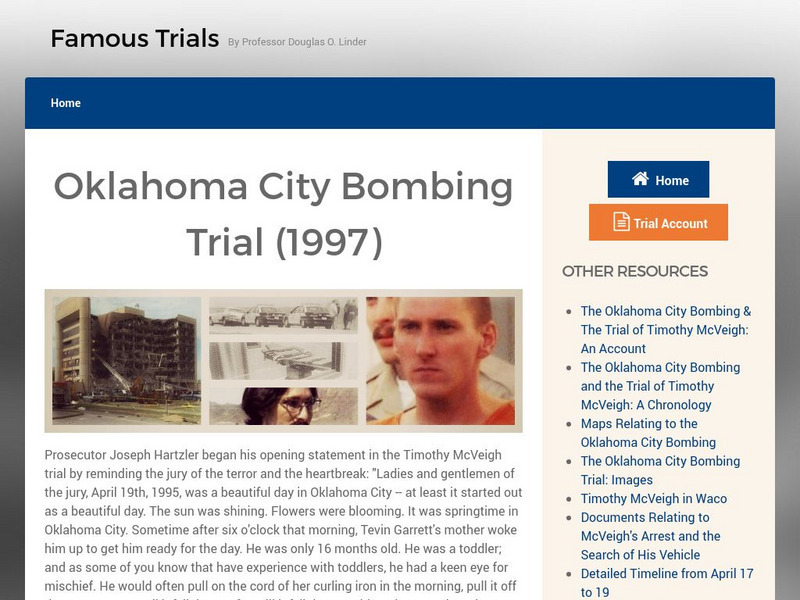
Famous Trials: Oklahoma City Bombing Trial 1997
A complete set of legal documents, pictures, timeline, eyewitness testimony and much, much more related to Timothy McVeigh and the famous bombing of the Federal building in Oklahoma City.
US National Archives
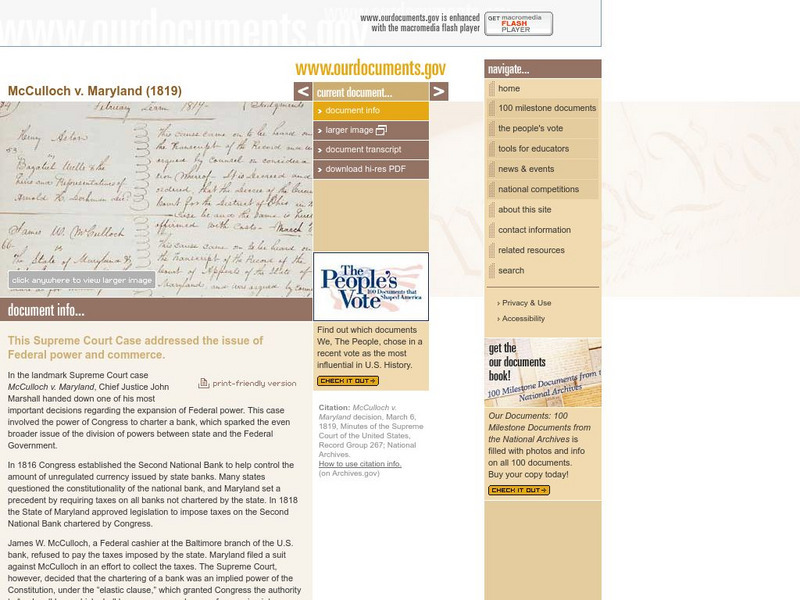
Our Documents: Mc Culloch v. Maryland
Learn about this landmark Supreme Court case on the issues of federal power and commerce. Provides an image of a document from the case files and a transcript of the opinion delivered in 1819 by Chief Justice John Marshall.
PBS
Pbs Teachers:stem Cell Research Policy Lesson Plan: Create an Advocacy Brochure
Research the science and controversy around stem cell research and evaluate, defend or attack President Bush's ruling on federal spending regarding this issue. Create brochures to display knowledge and point of view.
Independence Hall Association
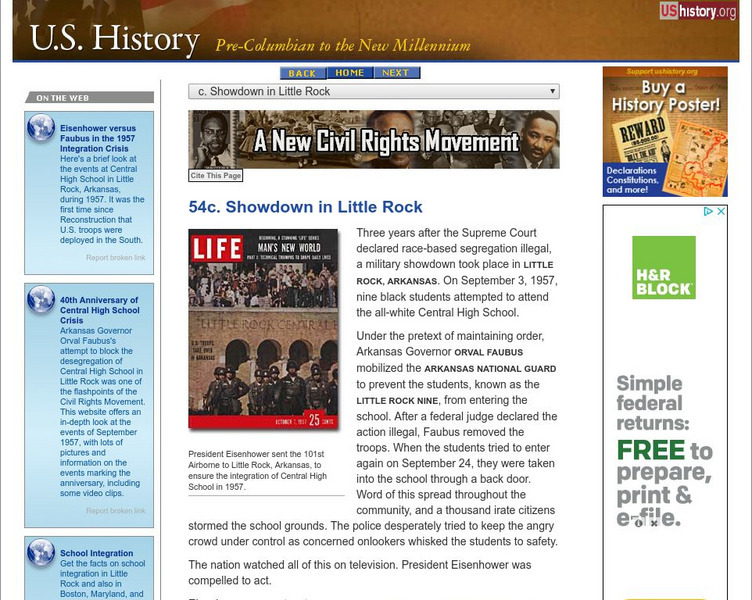
U.s. History: Showdown in Little Rock
Read about President Eisenhower's decision to send federal troops to Arkansas to enforce the desegregation of Central High School in Little Rock. See why that action was necessary, and how Central High School fit into the larger Civil...
City University of New York
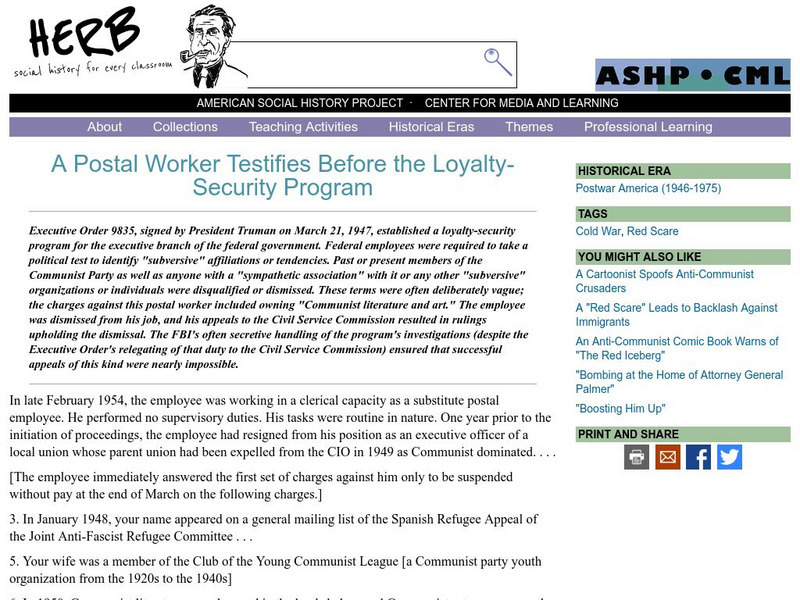
Ashp: A Postal Worker Testifies Before the Loyalty Security Program
Read the actions taken against a postal worker, who, as a federal worker, was subject to the vague loyalty oath. Find out what the charges where against him and what happened to him.

PBS
Wnet: Thirteen: The Supreme Court: Landmark Cases: Dred Scott v. Sandford (1857)
PBS features a summary of the landmark Supreme Court case of Dred Scott v. Sanford which ruled that African Americans are not American citizens, and therefore could not sue in federal court. Decision written by Chief Justice Roger B. Taney.
Other
International Wu Style Tai Chi Chuan Federation
This organization is an off shoot of the traditional Tai Chi Chuan Style. It blends other Chinese styles with the Tai Chi Chuan.
Independence Hall Association
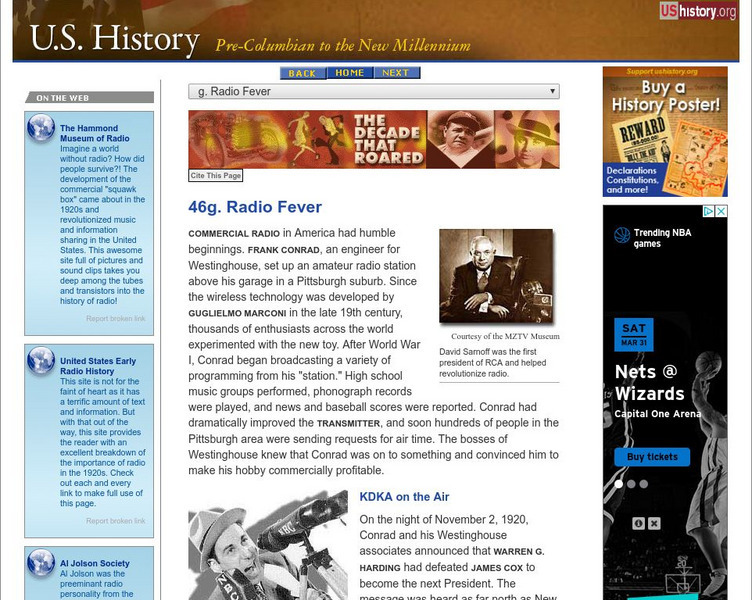
U.s. History: Radio Fever
Radio created a mass entertainment culture that could bridge the gap between those in California and those in New York. Read about the advent of radio stations, and the companies that owned them. See why the federal government had to...

Siteseen
Siteseen: American Historama: Glass Steagall Banking Act of 1933
Read interesting facts about the Banking Act of 1933, or the Glass-Steagall Act. It prohibited commercial banks from engaging in the investment business and created the Federal Deposit Insurance Corporation (FDIC).
PBS
Pbs Online News Hour: Report Finds Federal Leadership Lacking
The Government Accountability Office, a Congress-commissioned investigation group, rips the Bush administration for their lack of leadership and slow response to Hurricane Katrina. In particular, the report is critical of the Secretary...
Federal Reserve Bank
Federal Reserve Bank of San Francisco: Civil War Money
Resource gives a history of money through the Civil War. It includes information about what influenced types of money to be made, Confederate currency, and Union currency.
Internal Revenue Service
Irs: The Social Security Act of 1935 Lesson Plan
This lesson plan will help students understand the history and purpose of the Social Security Act of 1935 and the Federal Insurance Contributions Act (FICA).
Annenberg Foundation
Annenberg Learner: America's History in the Making: The New Nation
After the War of Independence, Americans were unable to agree on the form of their federal government. This unit explores how those conflicts played out as the new Republic defined its identity in relation to other nations.
PBS
Pbs Learning Media: The Fourteenth Amendment Part Ii
In this video segment from The Supreme Court, learn about the 1883 Supreme Court decision that marked the end of federal protections for individuals in states and the beginning of Jim Crow segregation.
Other
U.s. Interstate Highway System: 40 Year Report
Provides an analysis of the US interstate highway system. Includes information on the impact of the interstate highway system on the economy, safety, quality of life, and national defense.
Forum Romanum
Outlines of Roman History: The Supremacy of Rome in Italy
One of Rome's strengths was the way it governed the peoples it conquered. Find out the difference between the Romans, the Latins, and the Italians in terms of rights of citizenship.
Harp Week
Harp Week: The Presidential Elections: 1884 Overview
The campaign of 1884 was filled with scandals and recriminations from both parties. Read about the conventions that selected presidential candidates and read about the campaigns and election.

Library of Congress
Loc: Thomas: Legislative Information
This retired site captures historical legislative activity that includes bill summary and status, bill text, public laws by law number, most recent issue, roll-call votes, committee reports, house committees, and senate committees.
Digital History
Digital History: The Interstate Highway System
In 1956, President Dwight Eisenhower authorized the largest public works project in the history of the world. The president had been impressed by Hitler's autobahns and believed that a national system of highways was necessary to move...