Hi, what do you want to do?





Enchanted Learning
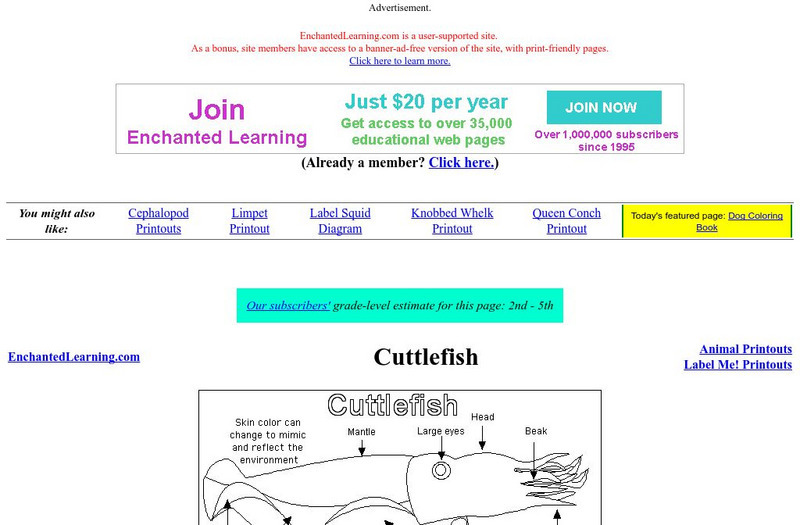
Enchanted Learning: Cuttlefish
Explore the world of the cuttlefish, a unique cephalopod. Students will gain a greater understanding of this mollusk through fun facts, information on the anatomy, diet, predators and more at this site.

PBS
Pbs Nature: Dolphin
Explore the world of marine life through the eyes of dolphins when you visit this clear and concise resource. This site features information on where and how dolphins live and other fun facts. Teachers can use this type of site to help...
PBS
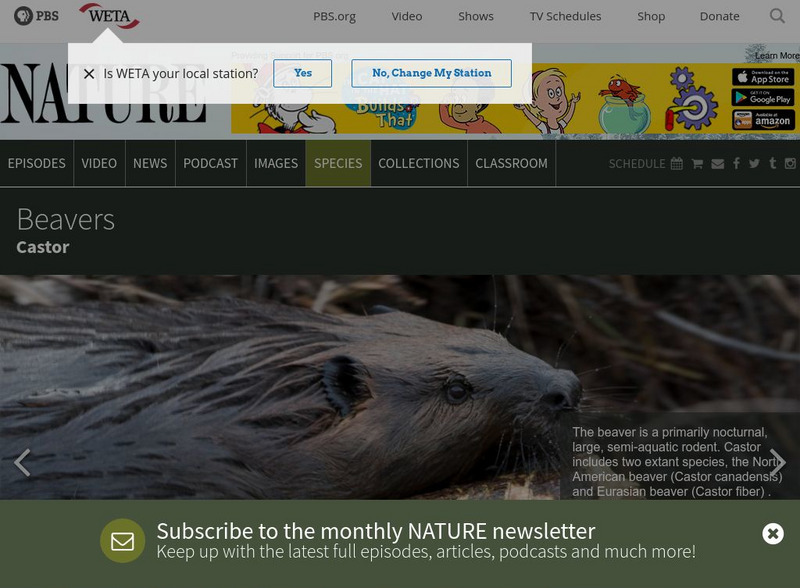
Pbs Nature: Beavers
Can you name the largest rodent that lives in North America? The beaver happens to be the correct answer. Explore this brief but interesting resource to learn where beavers live, what they eat and how they socialize.
PBS
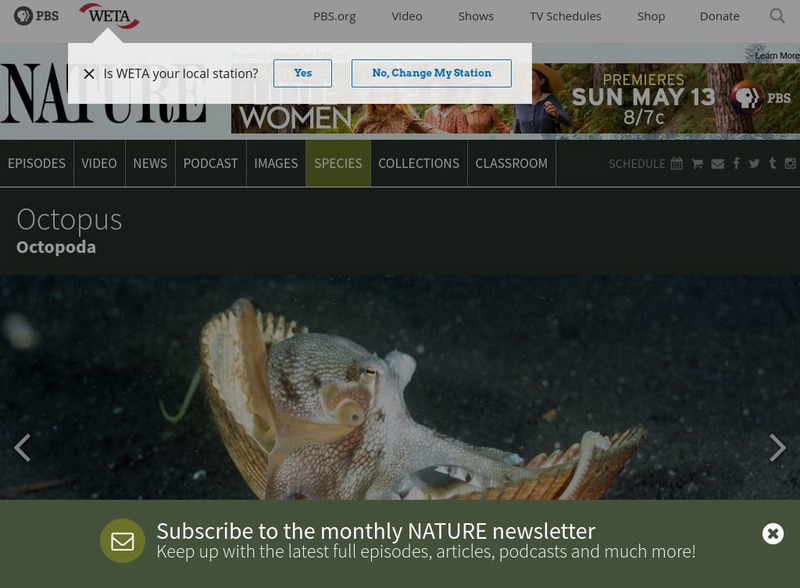
Pbs Nature: Octopus
Come and discover what octopi eat and where they live when you visit this resource. Students and teachers will benefit from this clear and concise presentation of information.
PBS
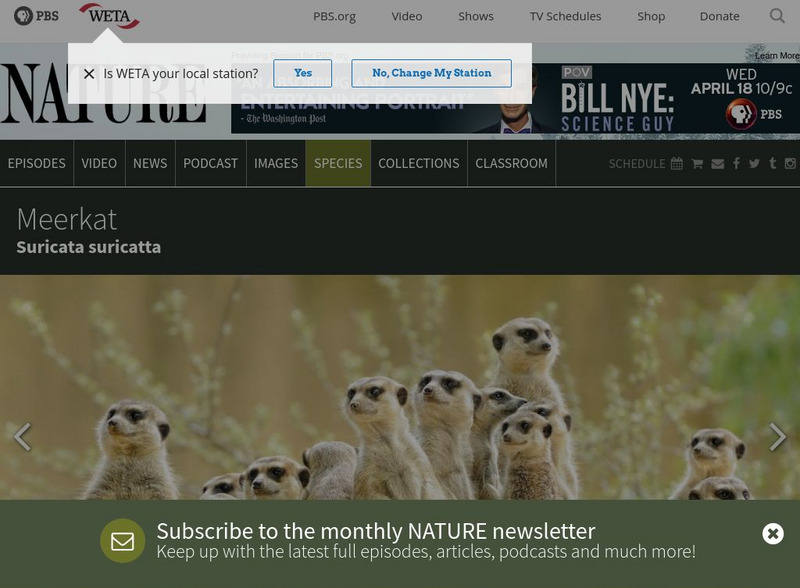
Pbs Nature: Meerkat
Do you know anything about meerkats? This site identifies where these mammals live, what they eat and other interesting facts. Meerkats are part of the mongoose family.
PBS
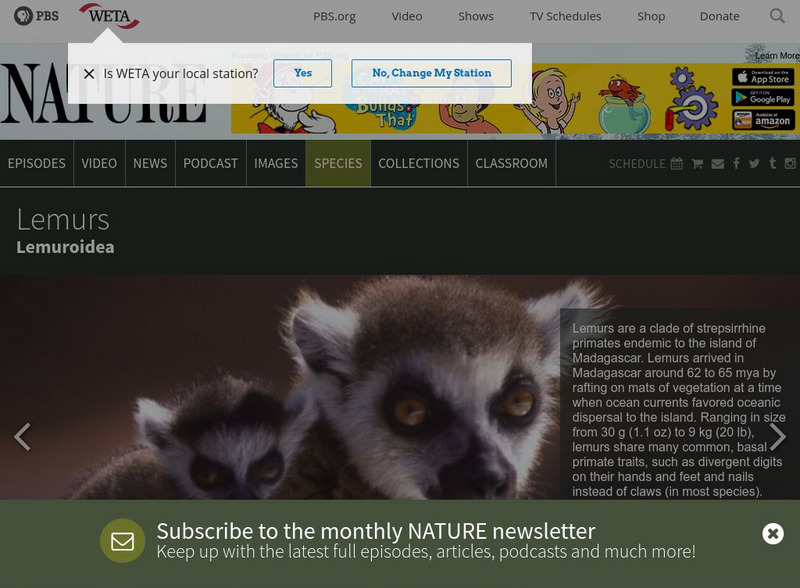
Pbs Nature: Lemur
What do you know about lemurs? This site provides an insight into how lemurs live, their habitats, their social environments and more.
PBS
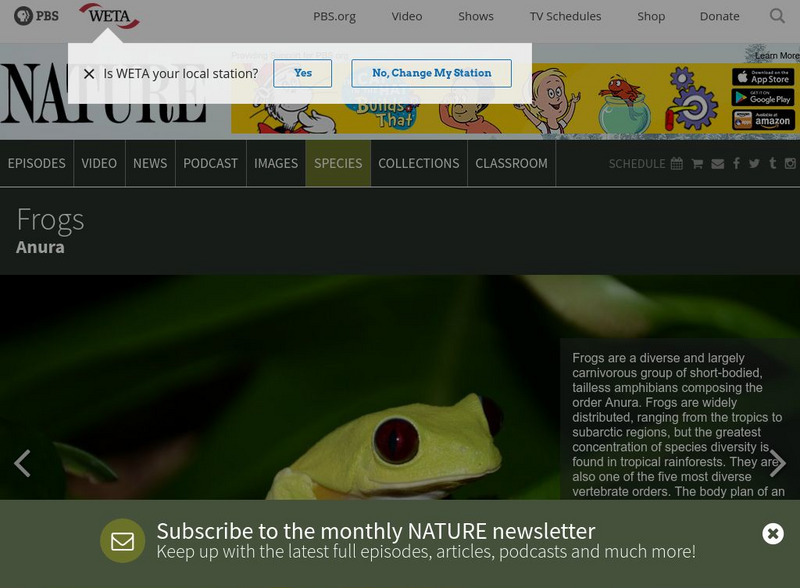
Pbs Nature: Frogs and Toads
Do you know how to tell the difference between a frog and a toad? This site provides interesting facts and information about this type of amphibian from where they live to what they eat and more.

PBS
Pbs Nature: Penguins
Did you know that penguins can survive for more than 100 days without food or water? Discover more educational facts about these fascinating birds when you explore this site.
PBS
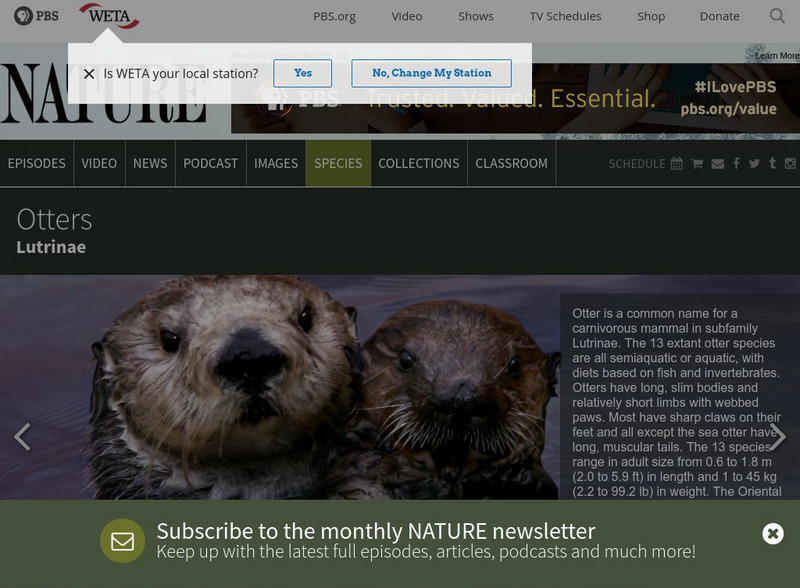
Pbs Nature: Otters
Discover more about how otters live, what they eat and how they socialize when you visit this informative resource. This condensed site will benefit students who need help narrowing their research information.
PBS
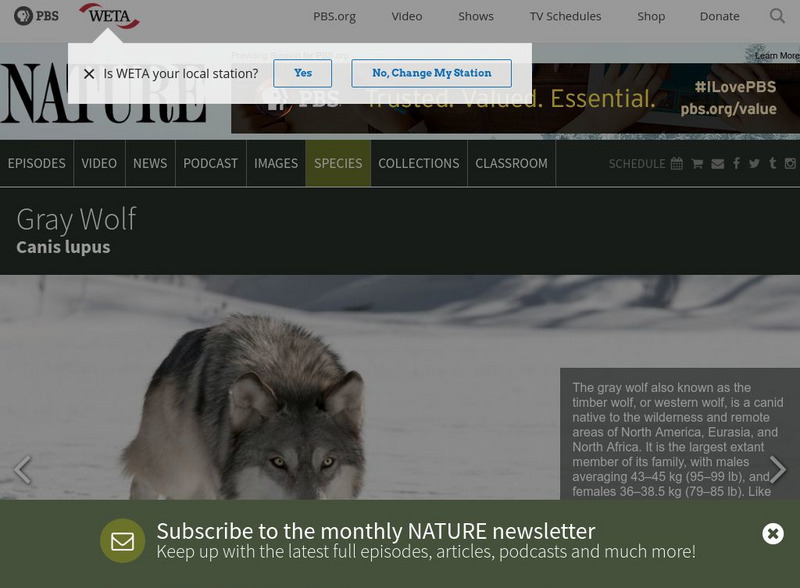
Pbs Nature: Gray Wolf
Gray wolves were a frequent sight on the American plains, however, they are now an endangered species despite attempts to reintroduce them to their former habitats in the continental United States. Learn about their natural history in...
PBS
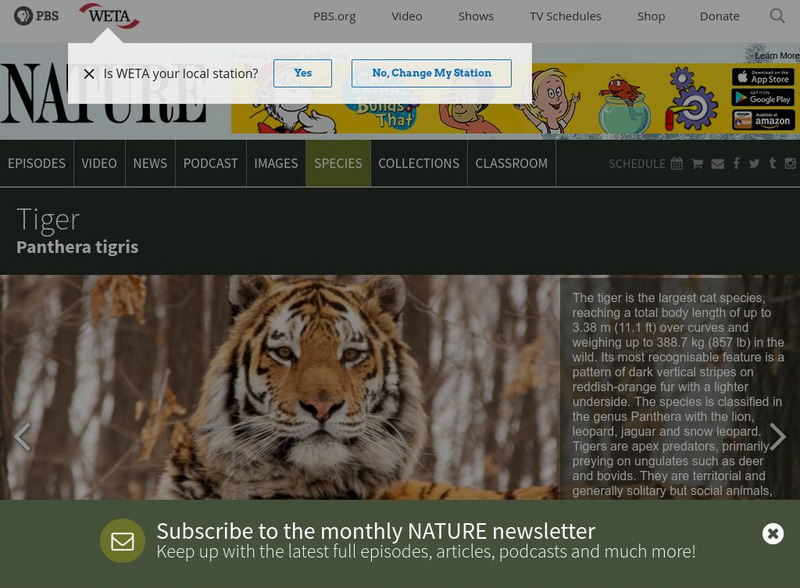
Pbs Nature: Tiger
Learn about how and where tigers live when you explore this resource. You can also investigate how tigers communicate with each other, enemies, friends, and humans through this site.

Concord Consortium
Concord Consortium: Evolution: Changes in the Environment
This activity places the control of the environment under the student's control. A field starts off with a uniform light level, and thus capable of growing plants with medium-sized leaves. Students can alter the environment by growing a...
Canadian Museum of Nature
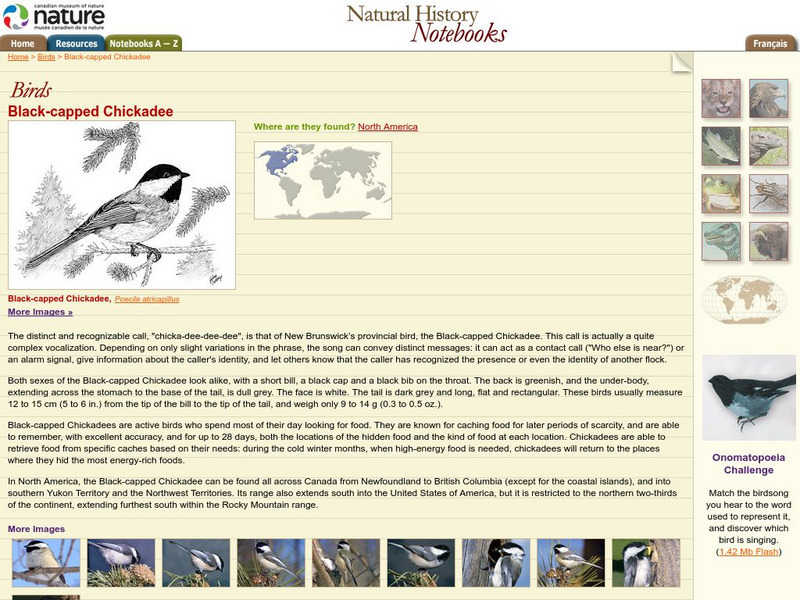
Canadian Museum of Nature: Black Capped Chickadee
Have you heard the bird call, "Chicka-dee-dee-dee"? This familiar call belongs to New Brunswick's provincial bird. Briefly described are its song, features, food and habitat. Included are ten beautiful close up photographs.
Canadian Museum of Nature
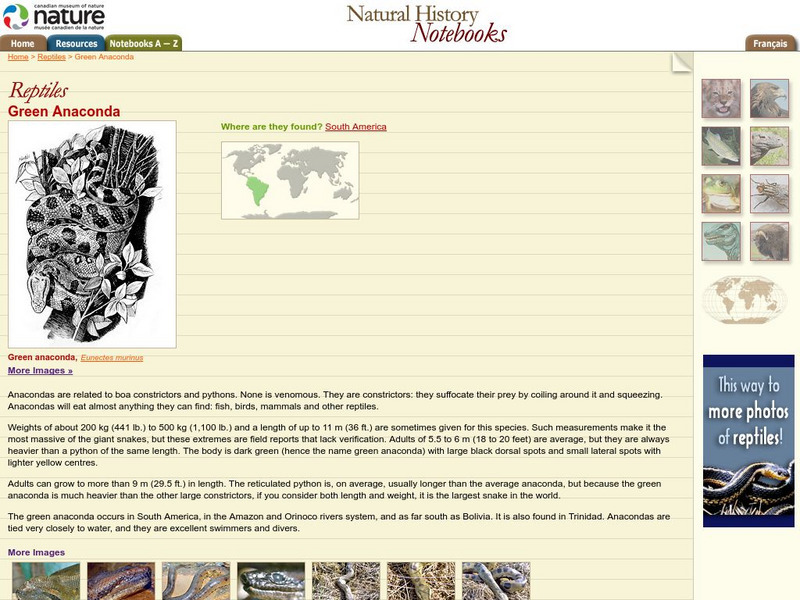
Canadian Museum of Nature: Anaconda
Did you know that a full grown Anaconda can weigh as much as 200 K g (441 lb.)? This is just one of the interesting facts that describe this reptiles features and habitat. Seven photographs provide excellent close up views.
Canadian Museum of Nature
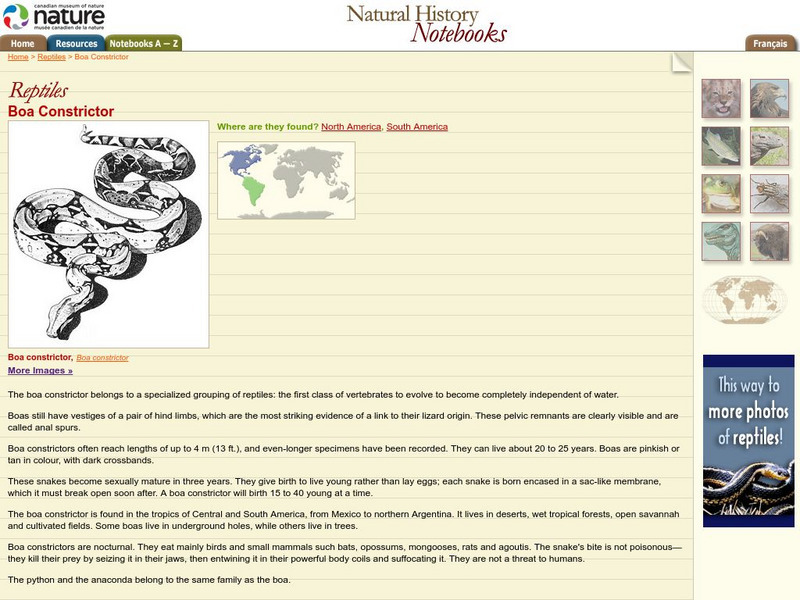
Canadian Museum of Nature: Boa Constrictor
The boa constrictor is not venomous, but kills its pray by constriction. Described at the boa constrictor's characteristics, young, habitat and pray. Included is one close up image.
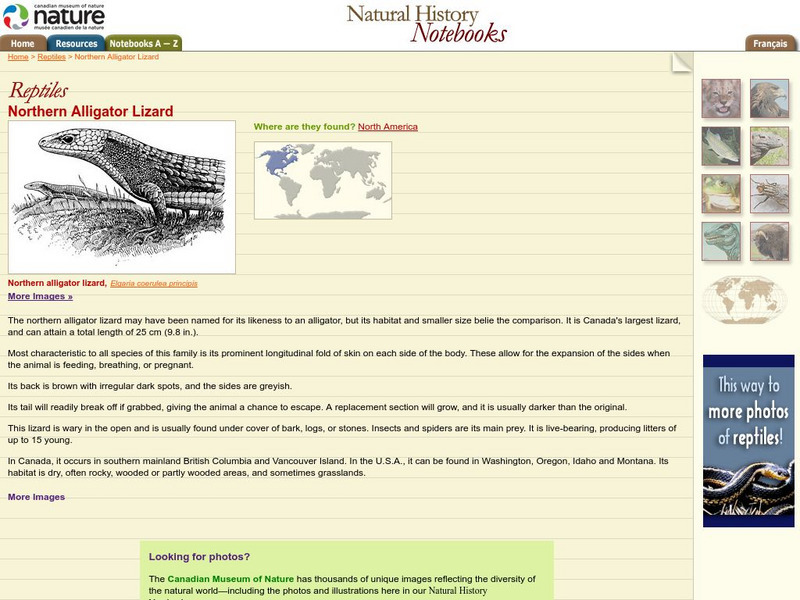
Canadian Museum of Nature
Canadian Museum of Nature: Northern Alligator Lizard
The northern alligator lizard is Canada's largest lizard. Described are its characteristics, and habitat.
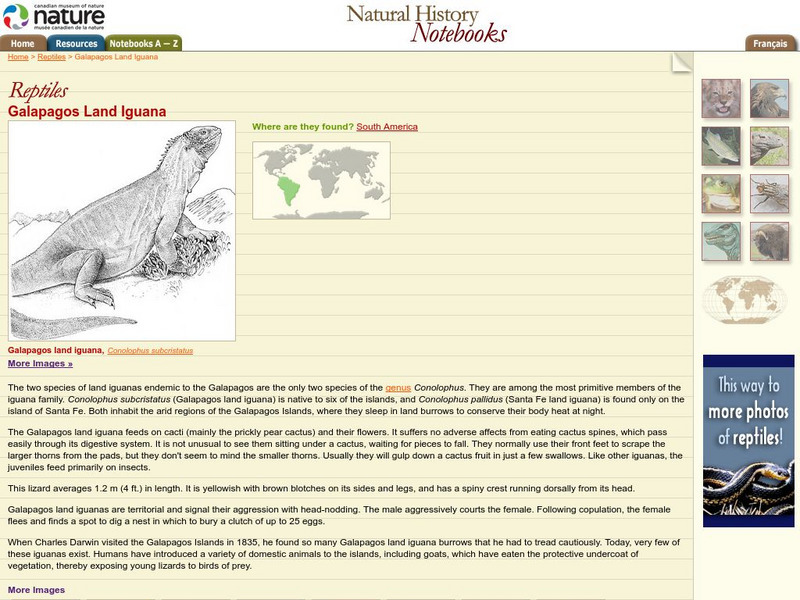
Canadian Museum of Nature
Canadian Museum of Nature: Galapagos Land Inguana
Today, very few of the Galapagos land iguanas exist. Described are their characteristics, food, and reproduction. Eight photographs show this iguana close up in its habitat.
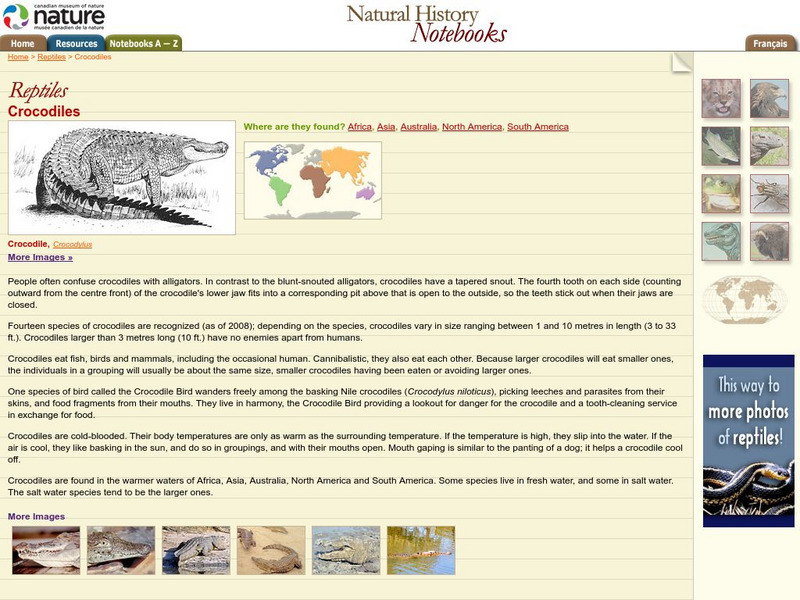
Canadian Museum of Nature
Canadian Museum of Nature: Crocodiles
Do you know the difference between a crocodile and an alligator? Find out how they differ, the number of species, what they eat, their characteristics and location. Six pictures show this reptile in its habitat.
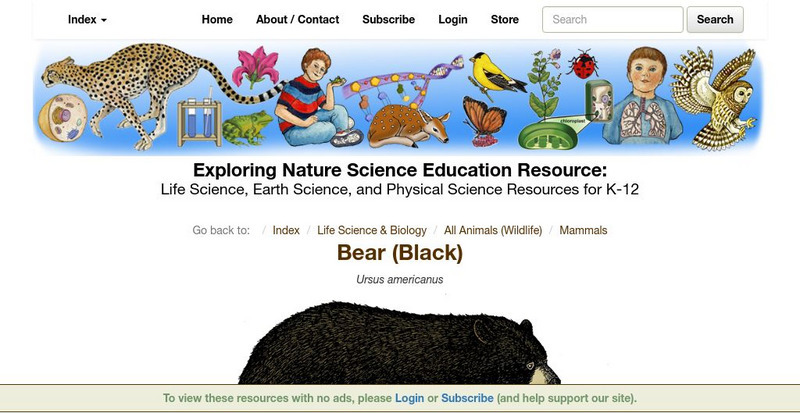
Exploring Nature
Exploring Nature Educational Resource: Bear (Black)
Explore the habitat, body traits, diet, reproduction patterns, lifespan, and classification of the black bear.
Exploring Nature
Exploring Nature Educational Resource: Bat (Red)
Explore facts about the red bat, including their habitat, body traits, diet, life span, reproduction traits, and complete classification.

Exploring Nature
Exploring Nature Educational Resource: Bat (Big Brown)
Explore facts about the big brown bat, including their habitat, body traits, reproduction patterns, what they eat and their full classification.
Exploring Nature
Exploring Nature Educational Resource: Badger (American)
Explore the habitat, body traits, diet, reproduction patterns, lifespan, and classification of the American Badger.

EL Education
El Education: Bird Cards
This set of note cards was created by kindergarten students from the Anser Public Charter School in Boise, Idaho, as part of a year-long Learning Expedition on birds. Each student became a specialist in his or her specific species of...