



Carnegie Museum of Natural History
Carnegie Museum of Natural History: Online Exhibitions
A collection of exhibits that can be found online allowing students to research the museums' artifacts and displays. Exhibits include earth science and dinosaurs topics.
American Museum of Natural History
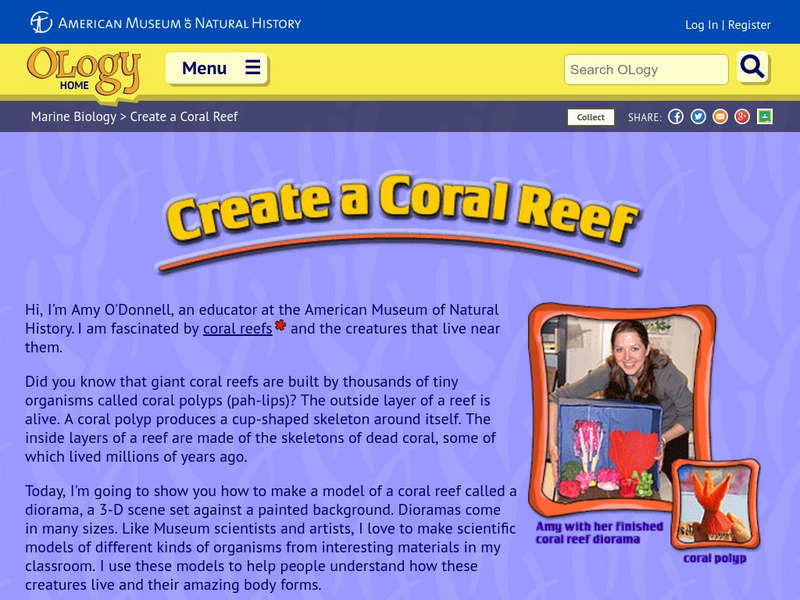
American Museum of Natural History: O Logy: Stuff to Do: Create a Coral Reef
Detailed instructions, with photographs for every step, for how to build a coral reef diorama.

University of Florida
Florida Museum of Natural History: My Body My Senses
This teacher's guide introduces children to the human body and the five senses and covers the major body parts and what they do. Children also will use their five senses to learn about the world.
PBS
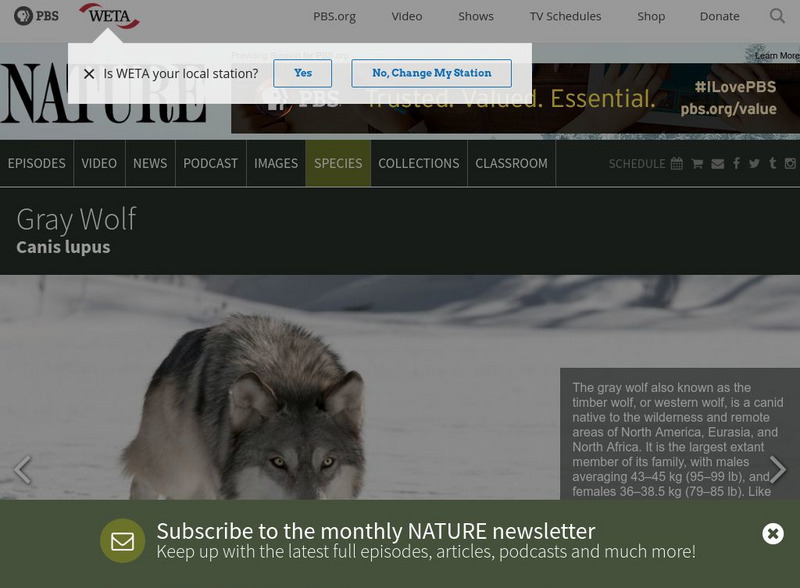
Pbs Nature: Gray Wolf
Gray wolves were a frequent sight on the American plains, however, they are now an endangered species despite attempts to reintroduce them to their former habitats in the continental United States. Learn about their natural history in...
American Museum of Natural History
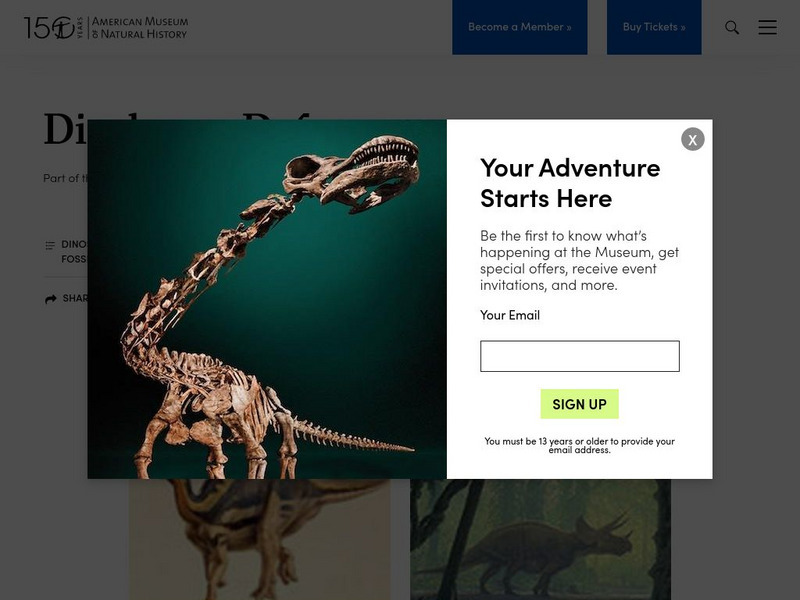
American Museum of Natural History: Dinosaurs: Display or Defense?
Are plates of armor, horns, exceptionally large heads, and bony plates examples of dinosaur display or defense? Visitors to this resource will learn what scientists have concluded about the purpose of these peculiar dinosaur features.

Natural History Museum
Natural History Museum: Types of Meteorites
As an online exhibit on meteorites, this site discusses the primary types of meteorites including iron meteorites, stony-iron meteorites, and stony meteorites.
Natural History Museum
Natural History Museum: The Secret Life of Bats: Bat Senses
Part of an online exhibit on bats, this section focuses on bat senses: sight, olfaction (smell), echolocation, and hearing.
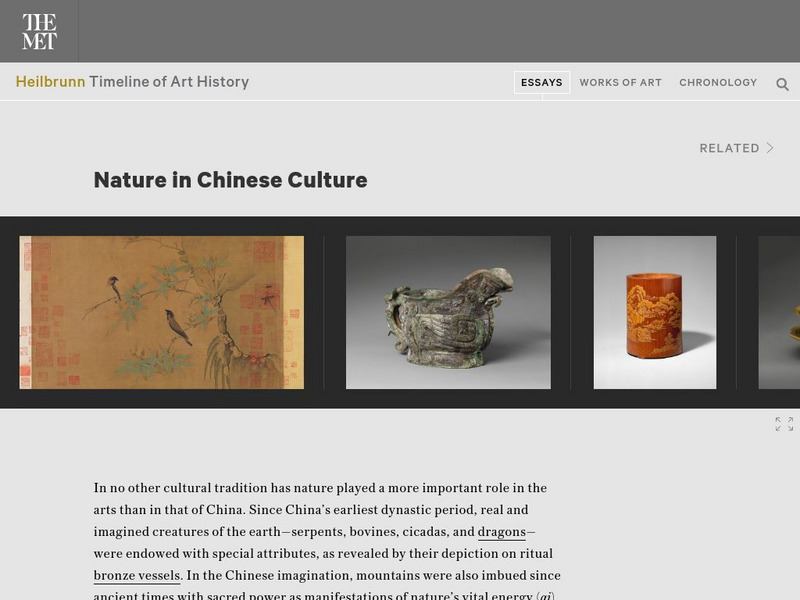
Metropolitan Museum of Art
Metropolitan Museum of Art: Nature in Chinese Art
The Metropolitan Museum of Art provides this informative page on the importance of Nature in Chinese Art. With information and pictures this in a nice resource for study.
Other
New Mexico Museum of Natural History and Science: Coelophysis
The Coelophysis is New Mexico's official state fossil. It lived in the late Triassic Period and has only been found in New Mexico. Popular questions about this dinosaur are answered here. In addition, there are numerous documents about...
Carnegie Museum of Natural History
Carnegie Museum of Natural History: Tlingit of the Northwest Coast
Explore the culture, beliefs, and people of the Tlingit Indians of the Northwest Coast.
Carnegie Museum of Natural History
Carnegie Museum of Natural History: The Hopi of the Southwest
With this resource, learners can read about family relations, the importance of corn and water to the Hopi, their wedding traditions, and what continues to sustain this long-lived culture.
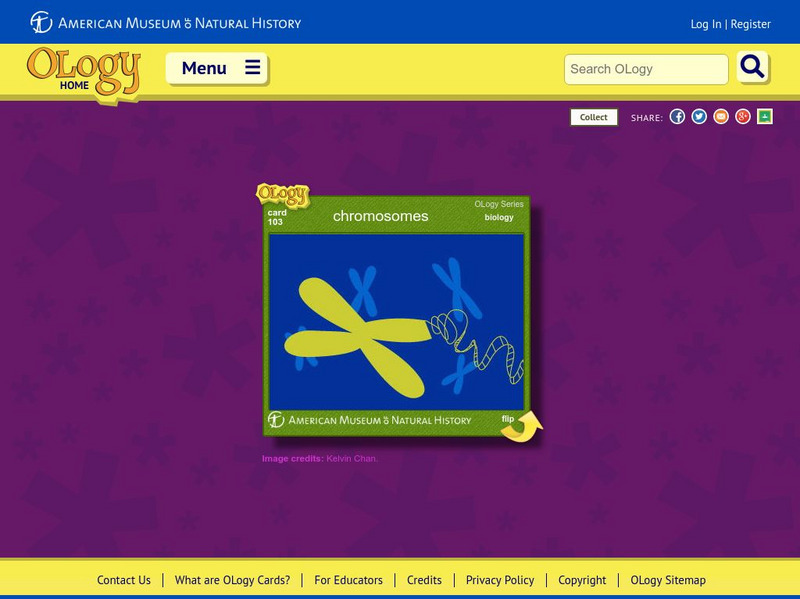
American Museum of Natural History
American Museum of Natural History: Chromosomes O Logy Card
Flip this interactive card to start learning about chromosomes, tiny, spaghetti-like packages of information. Answer multiple-choice and fact-or-fiction questions and review some fast facts about chromosomes.
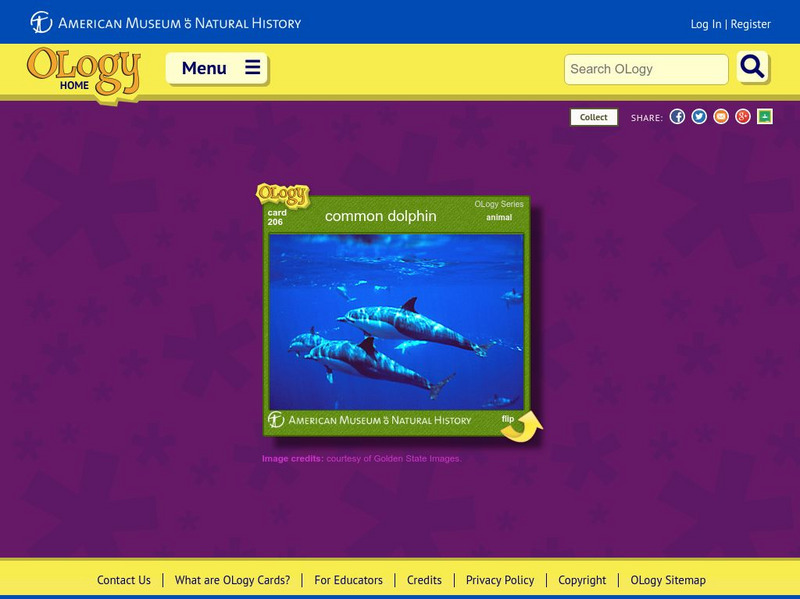
American Museum of Natural History
American Museum of Natural History: Common Dolphin O Logy Card
Flip this interactive OLogy card and start learning bite-size pieces of useful information about the common dolphin, such as its habitat, diet, and physical characteristics.

American Museum of Natural History
American Museum of Natural History: Communication O Logy Card
Turn over this interactive OLogy card and start learning bite-size pieces of useful information about how animals communicate.
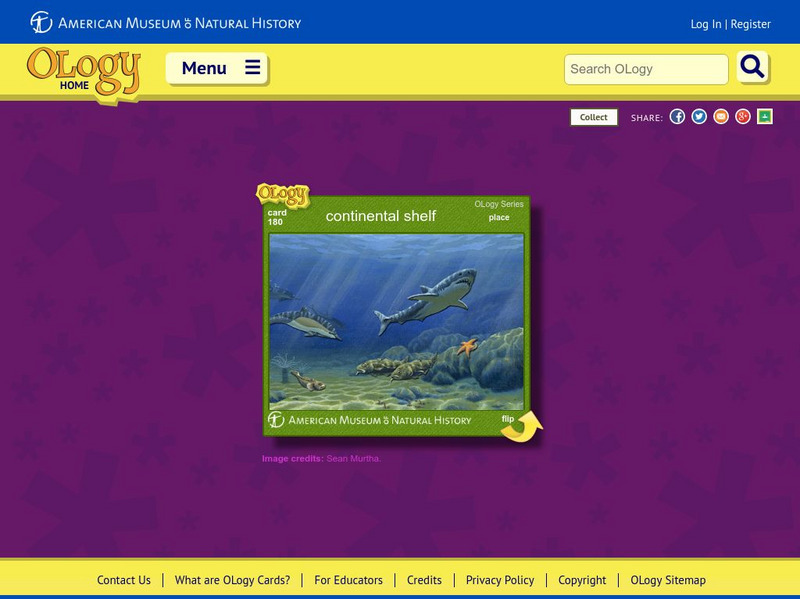
American Museum of Natural History
American Museum of Natural History: Continental Shelf O Logy Card
Turn over this interactive card to find fast facts, questions and answers, and similar bite-size pieces of information to help you understand the continental shelf.
American Museum of Natural History
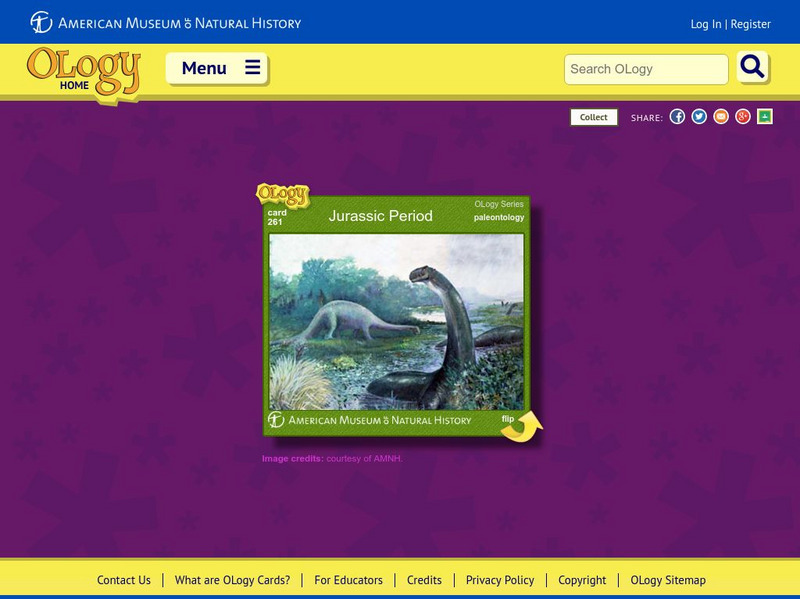
American Museum of Natural History: Jurassic Period O Logy Card
Learn a few facts about the Jurassic period from this interactive Ology card that also includes questions that can be answered. There is some information about Pangaea and dinosaurs.
American Museum of Natural History
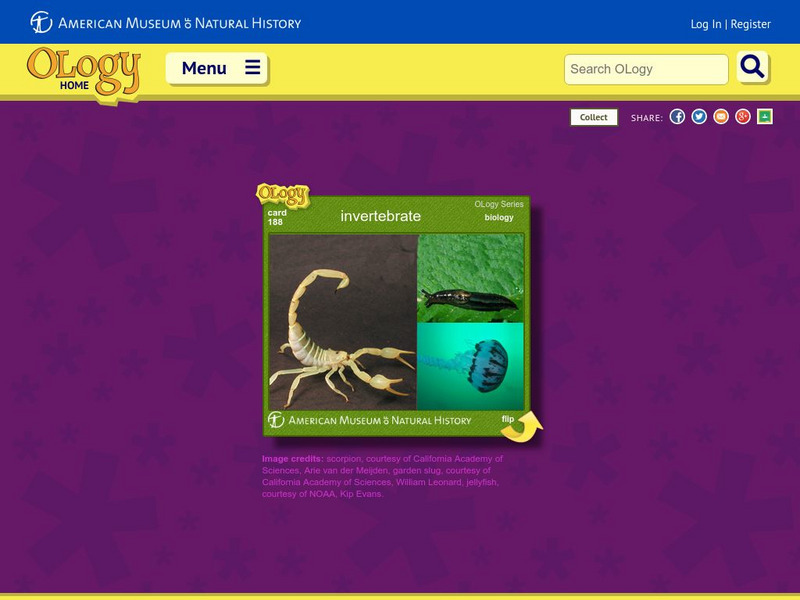
American Museum of Natural History: Invertebrate O Logy Card
Flip this interactive OLogy card to find questions and answers, fast facts, and other bite-size pieces of information to help you understand important characteristics of invertebrates.
American Museum of Natural History
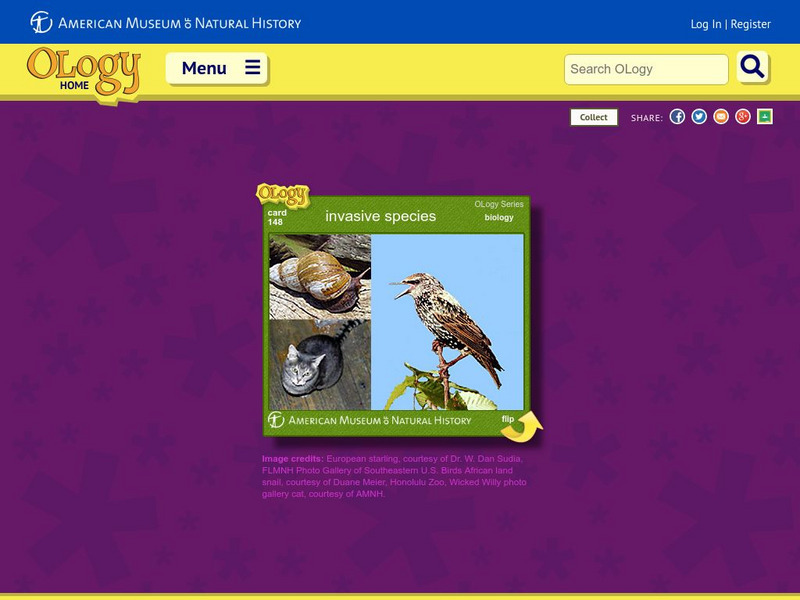
American Museum of Natural History: Invasive Species O Logy Card
Uncover facts about invasive species by turning over this interactive OLogy card.
American Museum of Natural History
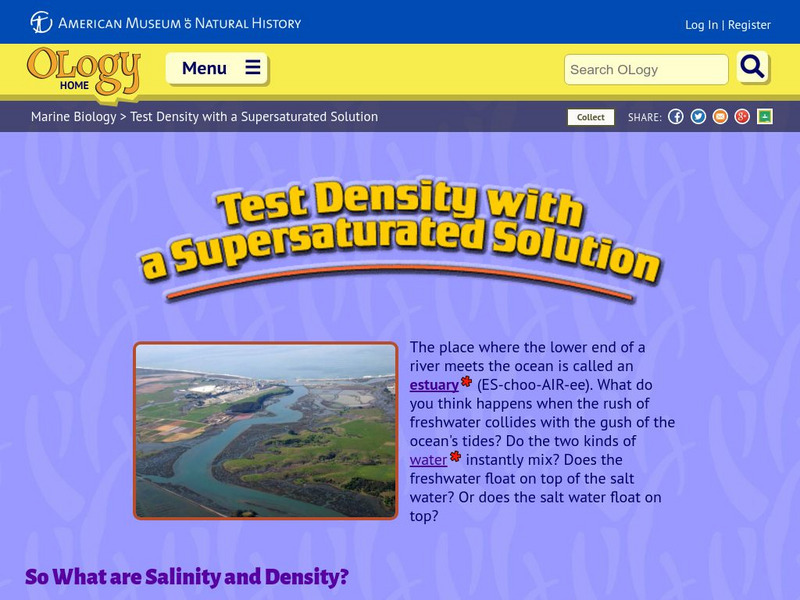
American Museum of Natural History: O Logy: Stuff to Do: Density of Salty Water
An experiment to test what happens when ocean water hits a freshwater estuary. Each step is demonstrated with photographs and the difference between salinity and density is explained.
American Museum of Natural History
American Museum of Natural History: Ology: Astronomy: Are You Cut Out for Mars?
Do you have what it takes to go on a space mission to the Red Planet? Think you can handle it? Take this quiz to find out!

PBS
Pbs Nature: Zebra
Learn about the natural history of the zebra in text and images, a relative of the horse that inhabits the Serengeti in East Africa and other parts of Africa.
American Museum of Natural History
American Museum of Natural History: O Logy: How Did the Universe Begin?
Bite-size introduction to two scientists-Hubble and Lemaitre-who played key roles in formulating the theory of the origin of the universe known as the big bang. Includes an interactive timeline on which you can plot out the approximate...
American Museum of Natural History
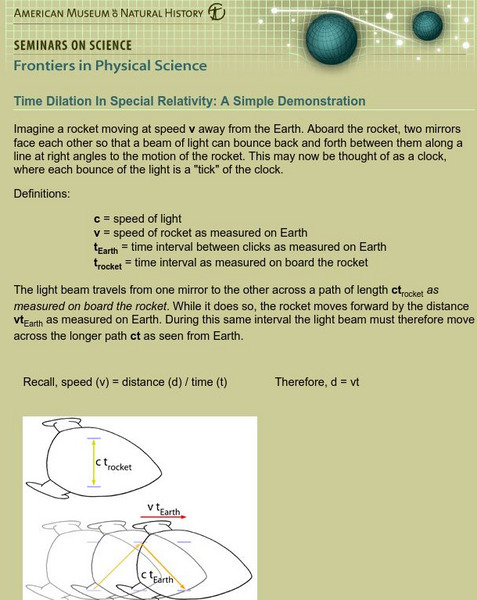
American Museum of Natural History: Resources: Time Dilation Equation
Using an example of light bouncing back and forth between two mirrors in a rocket, time dilation is explained in this resource. Step-by-step calculations using Einstein's time dilation equation are shown.
American Museum of Natural History
American Museum of Natural History: O Logy: Stuff to Do: Stargazing
Get started on the road to becoming an expert stargazer by following these recommendations for identifying stars, planets, and constellations. Includes an example of a journal that can be used as a record of your investigations.