



BSCS Science Learning
Bscs: Global Night Sky Comparison
This inquiry invites students to investigate human impacts on the environment. Specifically, students will examine the relationship between human population, light pollution, and how brightly celestial objects like stars appear in the...
BSCS Science Learning
Bscs: Globe at Night Dark Skies
In this inquiry, young scholars predict the best place to stargaze in Arizona based on the brightness of the night sky. Students are introduced to the concept of light pollution and Globe at Night, a global citizen science project in...
NOAA
Noaa: Estuaries 101 Curriculum: Estuary and the Watershed San Francisco Bay
In this activity, students investigate a large watershed, look for sources of pollution in the watershed, and study the impacts of a rain storm on a watershed and estuary, without going on a field trip. Students investigate the nature of...

US Environmental Protection Agency
Epa: Envirofacts Data Warehouse
Using zip codes, this site allows students to locate businesses in their communities that are producing wastes.
Other
Save Our Seas Organization: Home Page
Home page of the Save Our Seas Organization which seeks to protect all the oceans of the world.
Other
Museum of Health Care: Death in a Glass
Students can learn all about water pathogens in this online exhibit. They'll explore what kinds of micro-organisms infect water, how a water supply can get contaminated, how it is protected, and how officials investigate cases of...
Curated OER
Air Pollution
This article discusses how the United States is to blame for much of the world's pollution, along with some possible steps that could be taken by the government to reduce this.
Utah STEM Foundation
Utah Stem Action Center: Air, Natural Resources, and You
Students will analyze data from an air pollution study as well as facts about air pollution and use the data as evidence to infer the effect of using natural resources on the atmosphere and on public health.
American Institute of Biological Sciences
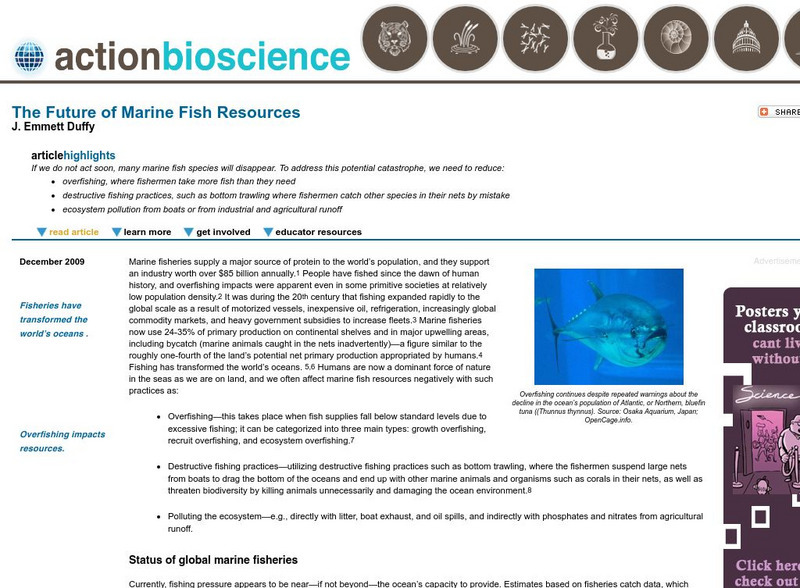
Action Bioscience: The Future of Marine Fish Resources
An article and supporting resources address the potential of fish populations significantly decreasing with overfishing, careless fishing, and pollution from nautical vessels and runoffs.

Society for Science and the Public
Science News for Students: Bad for Breathing
A study provides new clues as to why some respiratory diseases are linked to air pollution.
National Institutes of Health
National Institute of Environmental Health Sciences: Let's Talk About Water
Discover why water is so important, especially clean water. Find out where water comes from and how we can make it safe to drink and free from pollution.
US Environmental Protection Agency
Epa: Secret of Bog Creek
This site has a user guided story about a bog that has been a secret dumping ground for waste.
US Geological Survey
Usgs: Water Science for Schools Pesticides Ground Water
This US Geological Survey site briefly discusses the basics of why pesticides are increasingly found in our ground water. Click Home to access the site in Spanish.
US Geological Survey
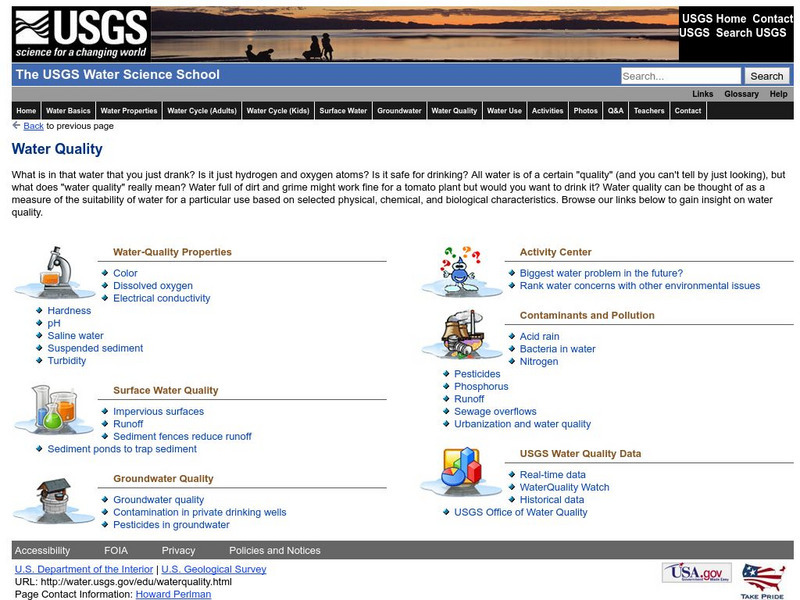
Usgs: Water Science School:water Quality
Learn about the importance of water quality and environmental influences that reduce it.
US Environmental Protection Agency
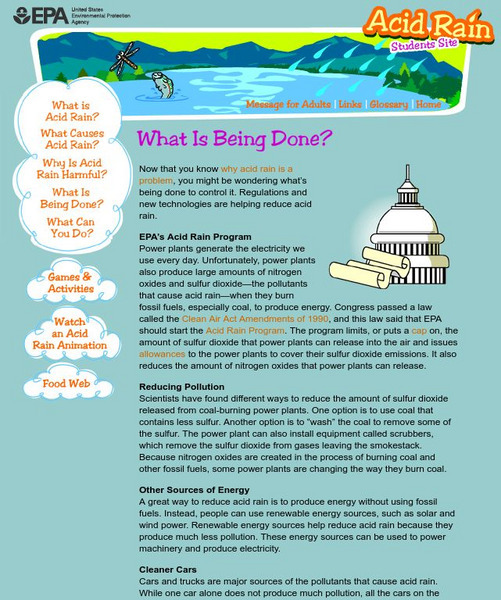
Epa: Acid Rain: What Is Being Done?
The EPA discusses the actions the government agencies are taking to reduce acid rain.
Discovery Education
Discovery Education: Scientific Inquiry, Episode 1
In this classroom activity, students discuss how people and pollution affect the environment. Then they demonstrate ways to recycle, reduce, and reuse.
Other
Conservation International
Articles, videos, and photos on the topic of world conservation such as green health, air quality, and climate change.
US Environmental Protection Agency
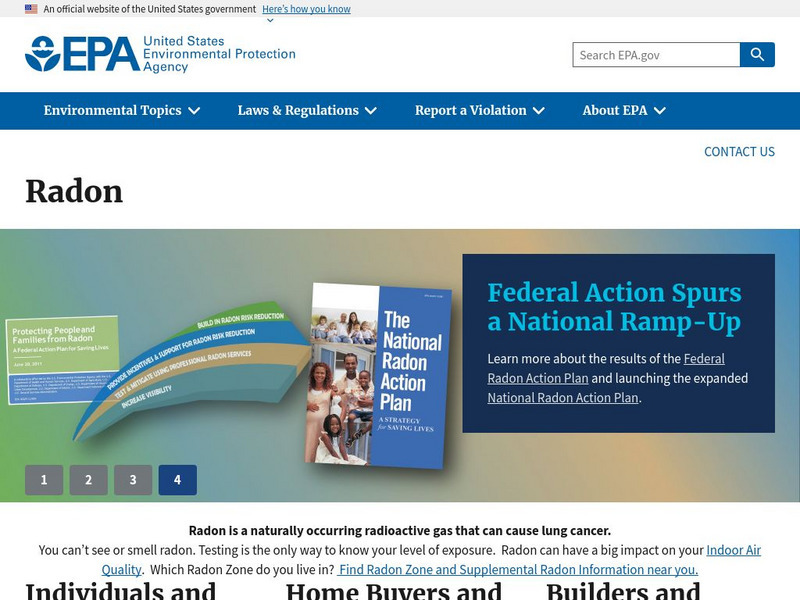
Epa: Radon
The EPA defines and explains how radon is a serious indoor air pollutant. Content includes information on how to test for radon, where it is most commonly found, all possible health effects of radon, and how to fix the problem in your home.
NOAA
Noaa: Estuaries 101 Curriculum: Nutrients in an Estuary
An overload of nutrients, called eutrophication (Greek for "good-nutrition"), can be harmful to estuaries. This phenomenon is also referred to as "over-enrichment," or "nutrient pollution". Students will investigate the range of...
BSCS Science Learning
Bscs: Restoring Oyster Reefs
After learning about the role of oysters in an estuary ecosystem and a population decline that oysters have faced over time from overharvesting and pollution, students work with data to determine where are ideal sites for restoring...
Encyclopedia of Earth
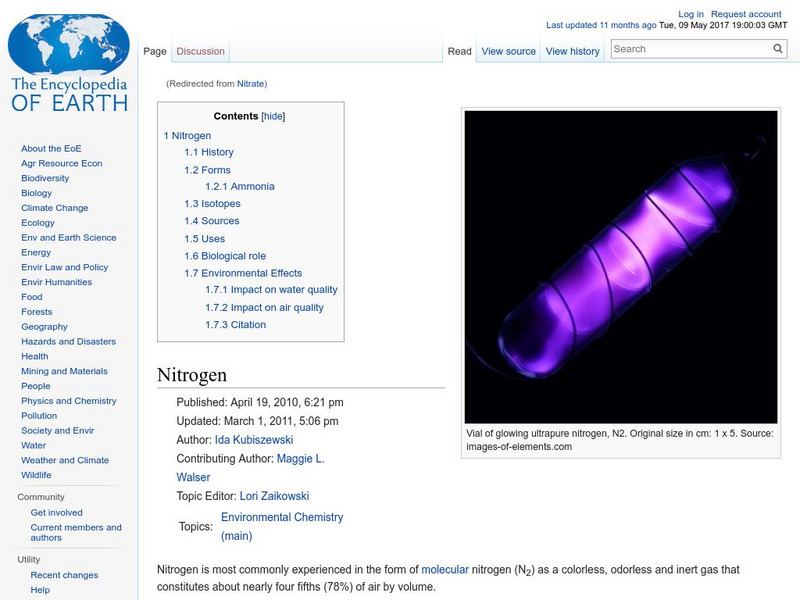
Encyclopedia of Earth: Physics & Chemistry: Nitrate
Discusses the chemistry of nitrate, the negative agricultural effects of too much nitrate in soil and in water sources, its toxicity to plants and livestock, and the impact on human health.
Read Works
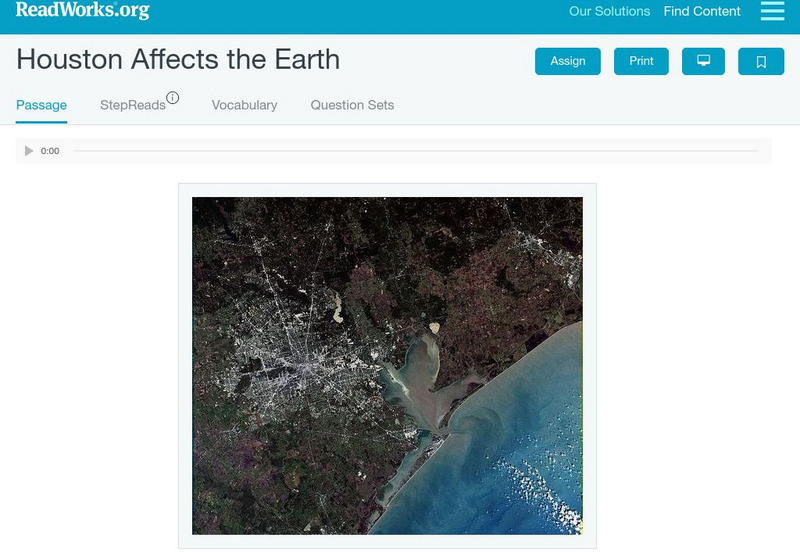
Read Works: Houston Affects the Earth
[Free Registration/Login Required] An informational text about a mayor who worked to reduce pollution in Houston, Texas in 2008. A question sheet is available to help students build skills in reading comprehension.
McGraw Hill
Glencoe Technology Education: Hybrid Electric Vehicles (He Vs)
What is an HEV and how can they help the environment? Follow this WebQuest and you will be able to answer those questions and more.