Hi, what do you want to do?





Science Education Resource Center at Carleton College
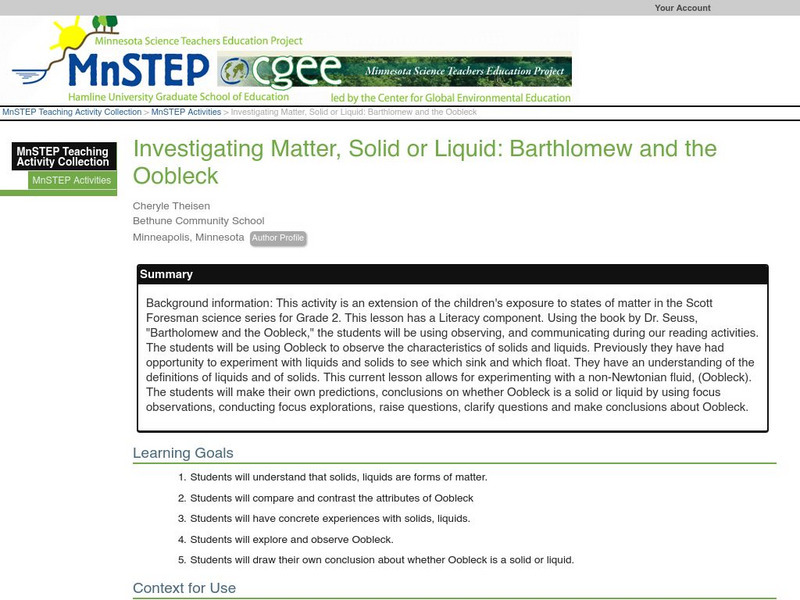
Serc: Investigating Matter, Solid or Liquid: Barthlomew and the Oobleck
Background information: This activity is an extension of the children's exposure to states of matter in the Scott Foresman science series for Grade 2. This activity has a Literacy component. Using the book by Dr. Seuss, "Bartholomew and...
National Council of Teachers of Mathematics
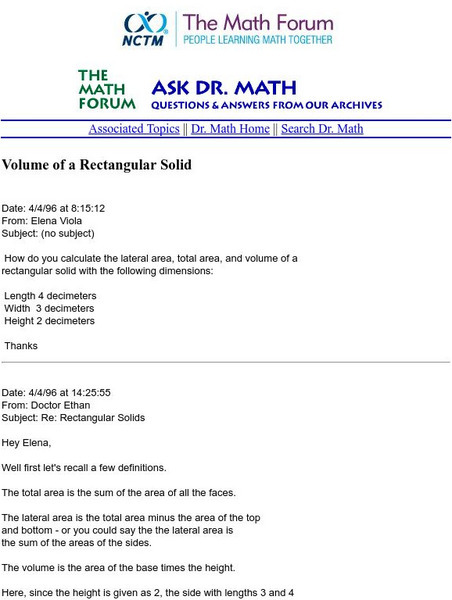
The Math Forum: Ask Dr. Math: Volume of a Rectangular Solid
This question and answer site covers lateral area, total area, and volume of a rectangular solid.
TeachEngineering
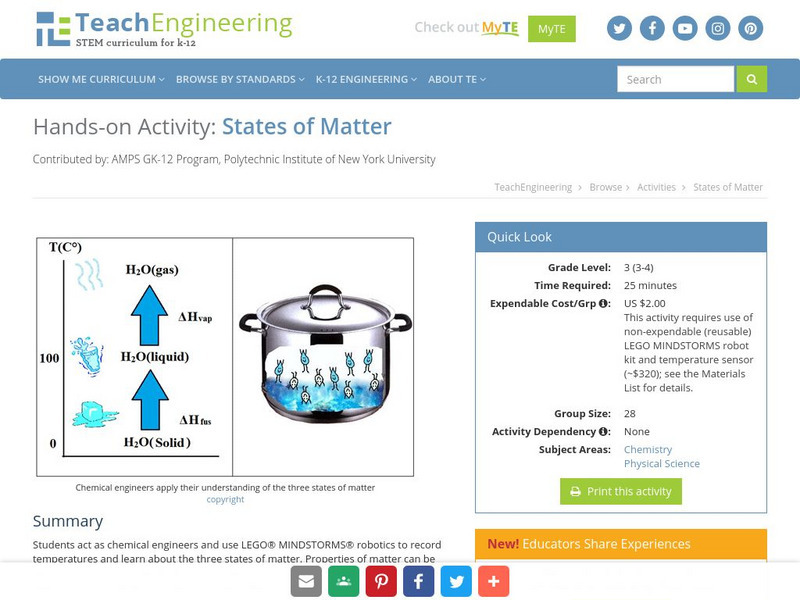
Teach Engineering: States of Matter
Students act as chemical engineers and use LEGO MINDSTORMS NXT robotics to record temperatures and learn about the three states of matter. Properties of matter can be measured in various ways, including volume, mass, density and...
Paul Dawkins
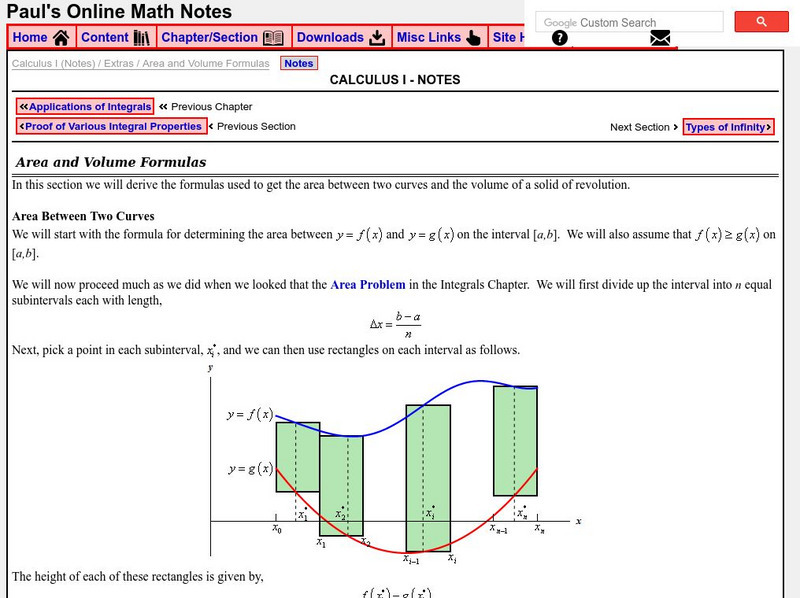
Paul's Online Notes: Calculus I: Area and Volume Formulas
The tutorial examines the area between two curves and the volume of a solid of revolution. The class notes are available in pdf format.
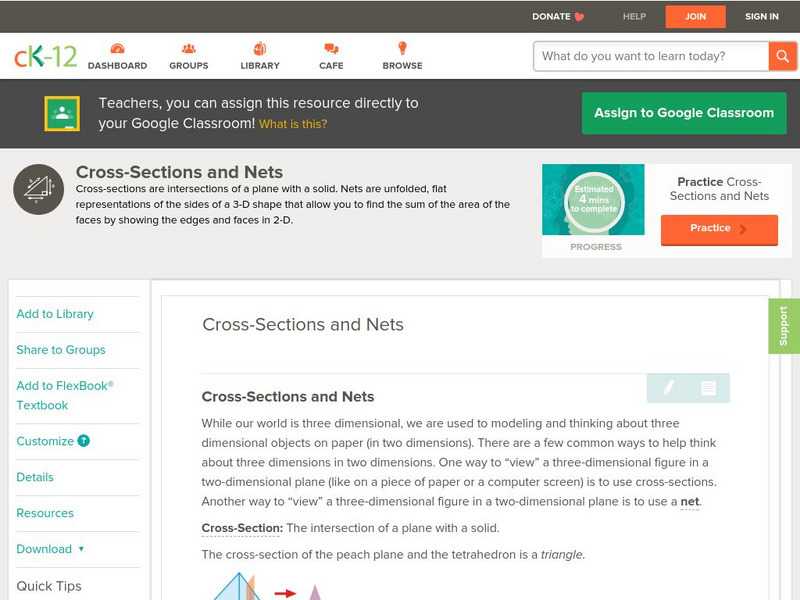
CK-12 Foundation
Ck 12: Geometry: Cross Sections and Nets
[Free Registration/Login may be required to access all resource tools.] In this lesson students draw two-dimensional representations of solid figures. Students examine guided notes, review guided practice, watch instructional videos and...

PBS
Pbs Learning Media: The Ruff Ruffman Show: Teacher's Guide: Kitchen Chemistry
Learn about kitchen chemistry alongside Ruff Ruffman. Students can use the videos, games, and activities from The Ruff Ruffman Show to discover how by investigating solids and liquids and exploring heating and cooling, science can help...

National Council of Teachers of Mathematics
The Math Forum: Ask Dr. Math: Polyhedra Classification
This question and answer site provides a lot of basic information about polyhedra. The five regular polyhedra, "The Platonic Solids," are described.
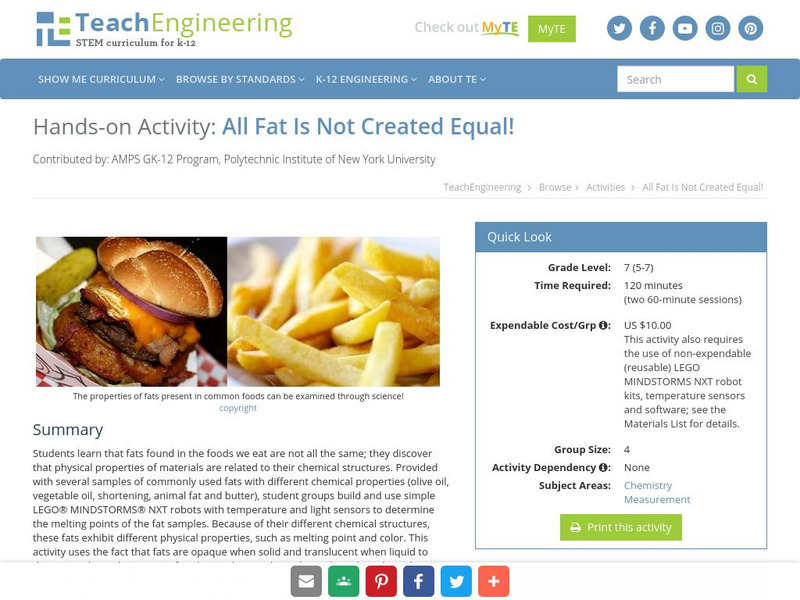
TeachEngineering
Teach Engineering: All Fat Is Not Created Equally!
Students learn that fats found in the foods we eat are not all the same; they discover that physical properties of materials are related to their chemical structures. Provided with several samples of commonly used fats with different...
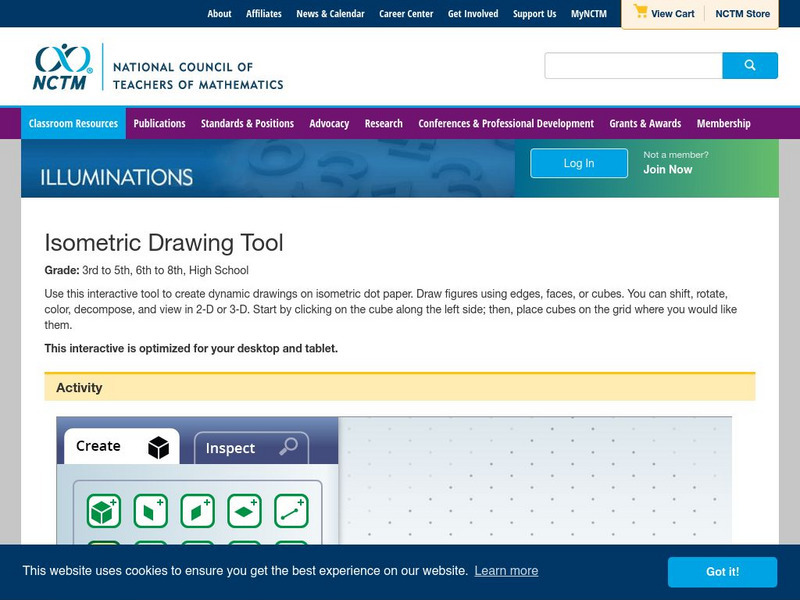
National Council of Teachers of Mathematics
Nctm: Illuminations: Isometric Drawing Tool
This site includes an interactive math tool to create drawings on isometric dot paper. You can draw figures using edges, faces, or cubes. Rotate and color your drawings, and view them in 3D or 2D.
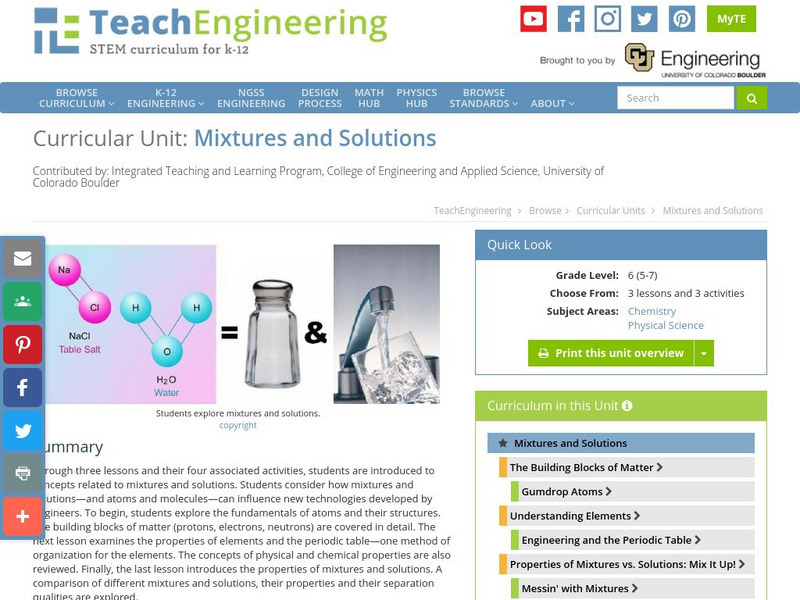
TeachEngineering
Teach Engineering: Mixtures and Solutions
This unit covers introductory concepts of mixtures and solutions. Students think about how mixtures and solutions, and atoms and molecules can influence new technologies developed by engineers. The first lesson explores the fundamentals...
Texas Instruments
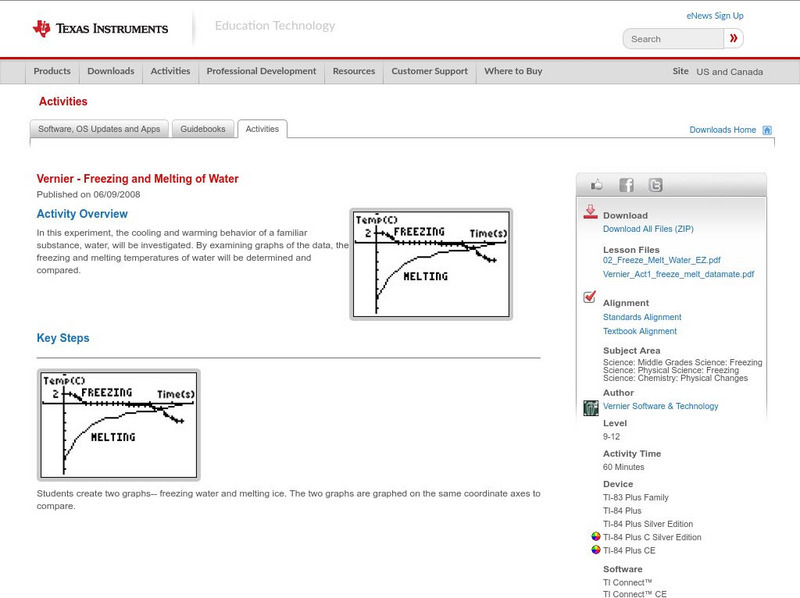
Texas Instruments: Freezing and Melting of Water
Freezing temperature, the temperature at which a substance turns from liquid to solid, and melting temperature, the temperature at which a substance turns from a solid to a liquid, are characteristic physical properties. In this...
New York University
Nyu: Welcome to Water
Educational resource invites users to understand the properties of water by first examining what water is and how we use it and then leads users to further information on the three states that water can exist.

Khan Academy
Khan Academy: Nets of Polyhedra
Practice matching 2D nets to the 3D shapes the fold up into. Students receive immediate feedback and have the opportunity to try questions repeatedly, watch a video or receive hints.
Khan Academy
Khan Academy: Surface Area Using Nets
Practice using the net of a 3D figure to find surface area. Students receive immediate feedback and have the opportunity to try questions repeatedly, watch a video or receive hints.
Khan Academy
Khan Academy: Surface Area
Practice finding the surface area of 3D objects. Students receive immediate feedback and have the opportunity to try questions repeatedly, watch a video or receive hints.
Other
Clean Sweep u.s.a.: Energy to Burn [Pdf]
This informative and interactive site examines how we can get power from garbage. Topics include: waste to energy plants, only ash remains, a bright idea, and more.

ClassFlow
Class Flow: Converting Parts of Speech
[Free Registration/Login Required] The ways in which nouns and adjectives e.g. fix, simple, solid, drama, can be made into verbs by use of the suffixes -ate and -en. Investigate spelling patterns and generate rules to govern the patterns.
National Council of Teachers of Mathematics
The Math Forum: Ask Dr. Math: Stellated Dodecahedron
This question and answer site provides information about stellated dodecahedrons, as well as several internet links to this topic.
Varsity Tutors
Varsity Tutors: Hotmath: Algebra Review: Polyhedra
Find a quick, concise explanation of what a polyhedra is. Examples are given and clearly explained.
National Council of Teachers of Mathematics
The Math Forum: Angles of an Octahedron
This question and answer site from The Math Forum with Dr. Math discusses the angle between two adjacent faces of an octahedron. Links are also provided for additional information on related subjects.
Georgia State University
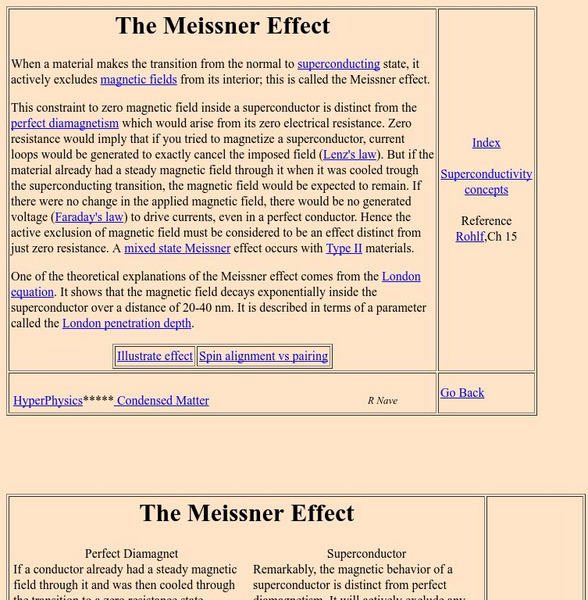
Georgia State University: Hyper Physics: The Meissner Effect
This site from the Georgia State University provides a good introduction to and illustration of the Meissner Effect, the property of a superconducting material whereby it actively excludes a magnetic field from within its interior.

Georgia State University
Georgia State University: Hyper Physics: Diamagnetism
This site from the Georgia State University provides a brief introduction to diamagnetism, explaining how Lenz's law accounts for diamagnetic behavior in all materials.

Georgia State University
Georgia State University: Hyper Physics: Paramagnetism
This site from the Georgia State University provides a brief introduction to paramagnetism, explaining how paramagnetic materials exhibit magnetization proportional to an applied magnetic field according to Curie's law.