


Read Works
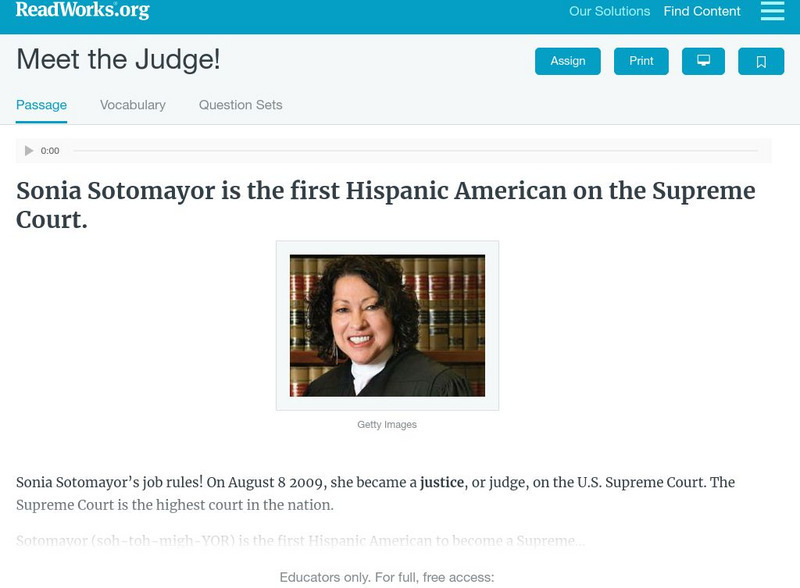
Read Works: Meet the Judge!
[Free Registration/Login Required] An biographical text about Sonia Sotomayor, the first Hispanic American Supreme Court Justice. A question sheet is available to help students build skills in reading comprehension.
NBC
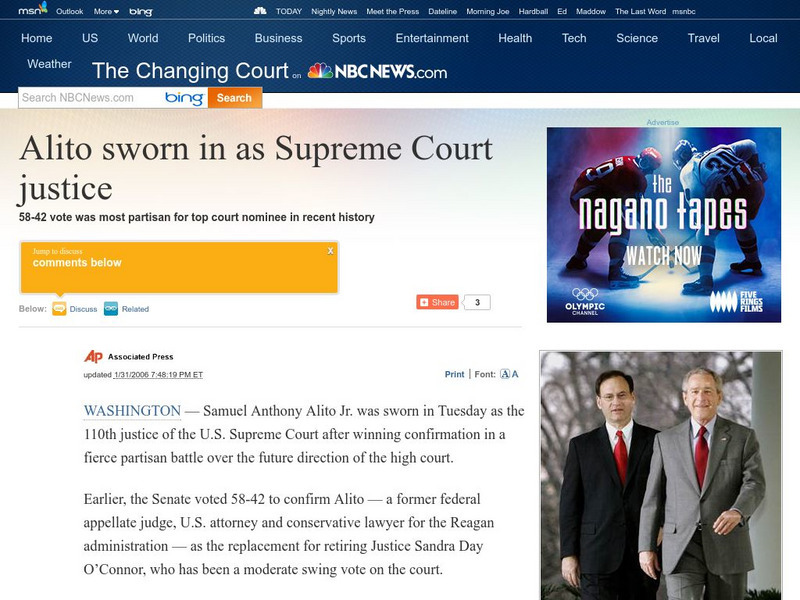
Nbc News: Alito Sworn in as Supreme Court Justice
January, 2006 report chronicling the swearing in of U.S. Supreme Court Justice Samuel Alito. Along with this report is a video report, link to political cartoons, photographic slideshow, and other resources.
PBS
Pbs Newshour: Supreme Court Rules Against Gun Ban
The Second Amendment and the right for United States citizens to bear arms is an issue often contested throughout the United States today. A recent ruling by the US Supreme Court is another example of such issues. June 30, 2010
![National Humanities Center: Toolbox Library: u.s. Supreme Court Plessy v. Ferguson [Pdf] Primary](https://static.lp.lexp.cloud/images/attachment_defaults/resource/large/FPO-knovation.png "National Humanities Center: Toolbox Library: u.s. Supreme Court Plessy v. Ferguson [Pdf] Primary")
National Humanities Center
National Humanities Center: Toolbox Library: u.s. Supreme Court Plessy v. Ferguson [Pdf]
Read this concise discussion of the landmark Supreme Court decision, Plessy v Ferguson. Find a synopsis of the case, the majority opinion of the court, and the dissenting opinion by Justice Harlan.
Alabama Learning Exchange
Alex: Extra! Extra! Supreme Court Case Makes Headlines!
This is a project to conclude the study of the Judicial Branch of our government. The students, working in pairs, will be assigned a landmark Supreme Court case to research in a computer lab setting. They will then construct a one-page...
Other
Ss Bulletin: Constitutional Background to the Social Security Act of 1935 [Pdf]
A very interesting discussion of the potential problems that plagued the implementation of the Social Security Act. Read about the cases brought before the Supreme Court which gave Congress the constitutional ability to tax and spend for...
US National Archives
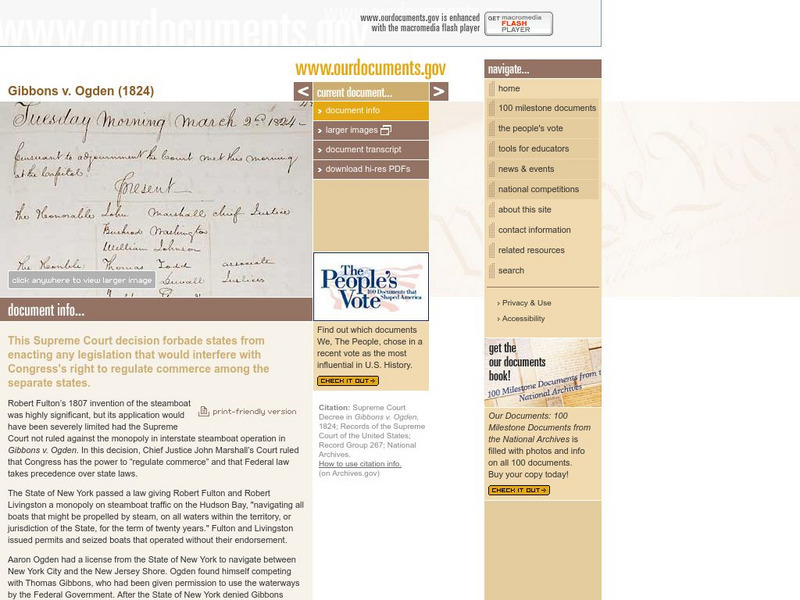
Our Documents: 100 Milestone Documents: Gibbons v. Ogden(1824)
Use this site to learn all about this Supreme Court decision that dealt with interstate commerce. View an image of the original document and read the complete text.
PBS
Pbs Learning Media: The Fourteenth Amendment Part Ii
In this video segment from The Supreme Court, learn about the 1883 Supreme Court decision that marked the end of federal protections for individuals in states and the beginning of Jim Crow segregation.

US National Archives
Docsteach: u.s. V. Amistad: A Case of Jurisdiction
Students will analyze specified passages from the Supreme Court's decision in United States v. Libellants of Schooner Amistad to explore the concept of jurisdiction and how a case travels through the federal court system.
Library of Congress
Loc: Slaves and the Courts
Slaves and the Courts, 1740-1860 contains just over a hundred pamphlets and books (published between 1772 and 1889) concerning the difficult and troubling experiences of African and African-American slaves in the American colonies and...

Read Works
Read Works: The Three Branches of Government
[Free Registration/Login Required] Intended for early elementary students, ReadWorks provides an information text about the three branches of government. A question sheet is available to help students build skills in reading comprehension.
Other
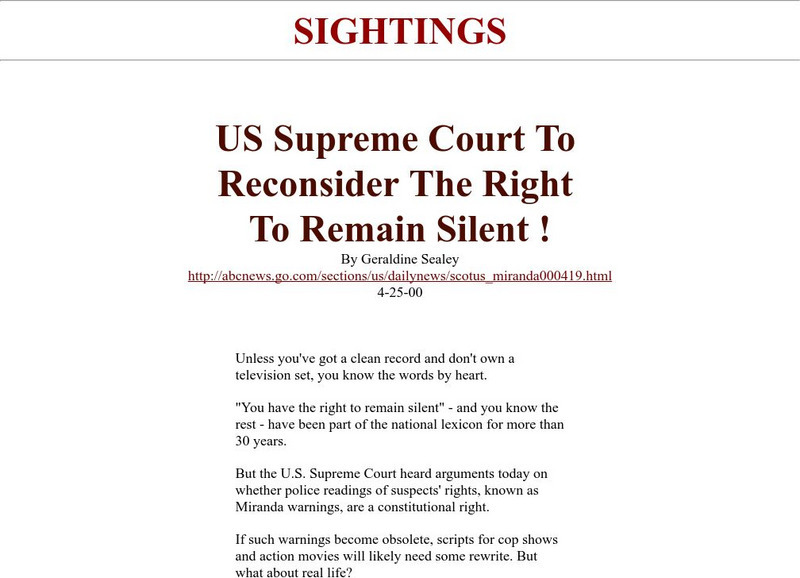
Us Supreme Court to Reconsider the Right to Remain Silent!
This article sums up the anticipated views of Supreme Court members on the occasion of the arguments to reverse the Miranda decision.
iCivics
I Civics: Elk v. Wilkins (1884)
This mini-instructional activity examines the Supreme Court's ruling that the 14th Amendment's Citizenship Clause did not apply to American Indians born on Native reservations. Students analyze a primary document and discover how the...
iCivics
I Civics: Loving v. Virginia (1967)
This mini-instructional activity covers the basics of the Supreme Court's decision that struck down state bans on interracial marriage. Students learn about the 14th Amendment's Equal Protection Clause, and its use in court cases to...
iCivics
I Civics: Obergefell v. Hodges (2015)
This mini-lesson covers the basics of the Supreme Court's decision that extended marriage rights to same-sex couples. Students learn about the 14th Amendment's Equal Protection and Due Process Clauses, and how the Court's interpretation...
Independence Hall Association
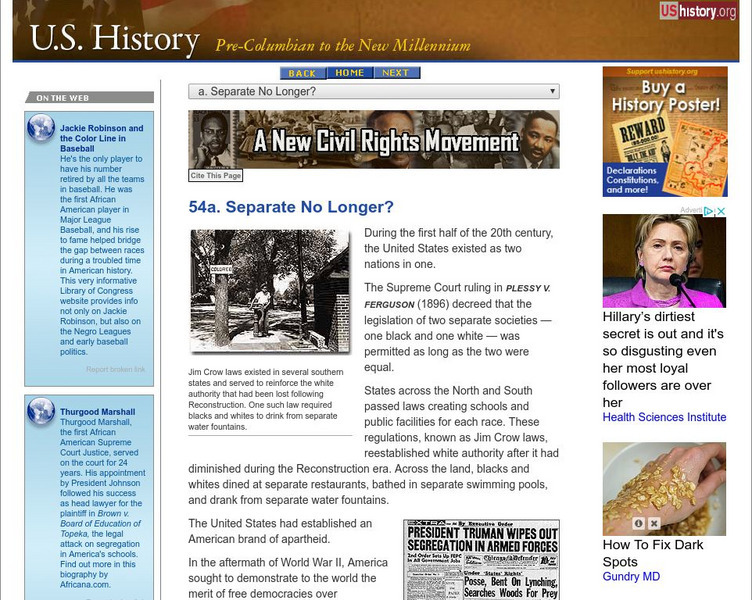
U.s. History: Separate No Longer?
An explantion of how the Supreme Court decision in Brown v Board of Education of Topeka turned the concept of separate but equal on its head. See how they determined that the 14th Amendment was being violated when schools did not fund...
PBS
Pbs News Hour: Senate Confirms Samuel Alito
The confirmation of U.S. Supreme Court Justice, with particular emphasis on the fight in the Senate, is highlighted in this report from January, 2006. A transcript, audio, and video are available.
PBS
Pbs News Hour: Alito Becomes 110th Supreme Court Justice
January, 2006 report on the confirmation and swearing in of Justice Samuel Alito.
Cornell University
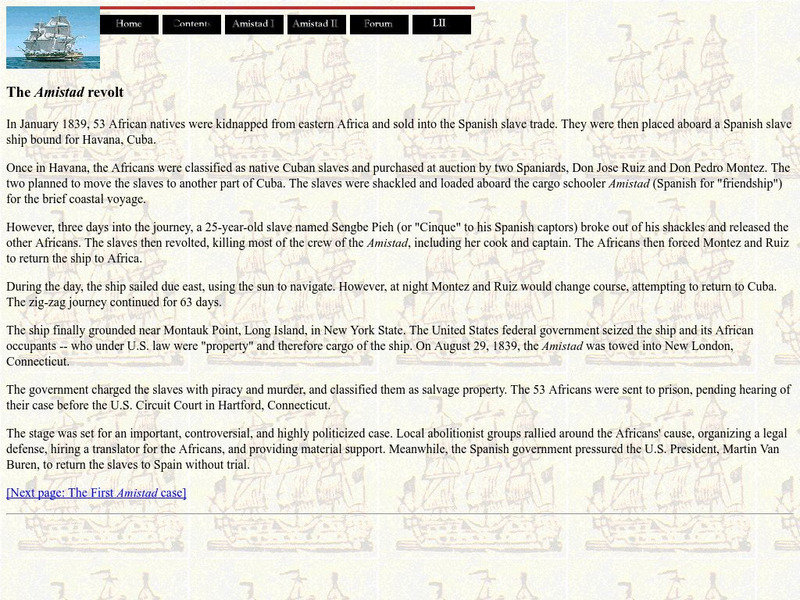
Cornell University: Law School: Amistad Revolt
This site from the Cornell University School of Law provides a brief description of what happened during the Amistad Revolt and gives details concerning the Supreme Court that followed.
NBC
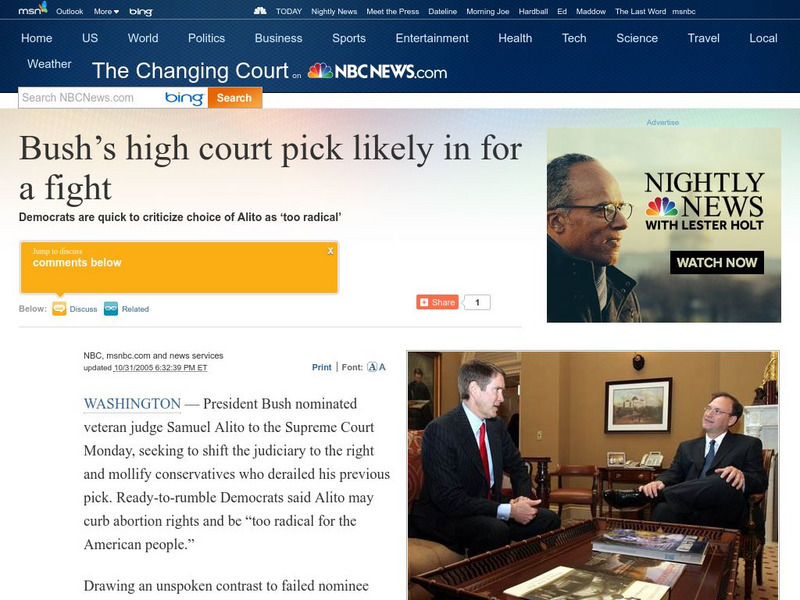
Nbc News: Bush's High Court Pick Likely in for a Fight
Detailed article from October, 2005 forecasting the difficult road to nomination that Samuel Alito will face in the Senate.
Curated OER
Cnn.com:change at the Supreme Court
CNN article providing detailed information on the Senate confirmation hearing of Samuel Alito who was sworn in as the 110th Supreme Court justice on January 31st, 2006.
NBC
Nbc News: Samuel Alito Nomination Remarks
Samuel Alito's remarks after being nominated by President George W. Bush as the replacement for Sandra Day O'Connor on the U.S. Supreme Court.

Khan Academy
Khan Academy: Brown v. Board of Education of Topeka
Discusses the famous Supreme Court decision that ended school segregation, Brown v. Board of Education of Topeka (1954).
US National Archives
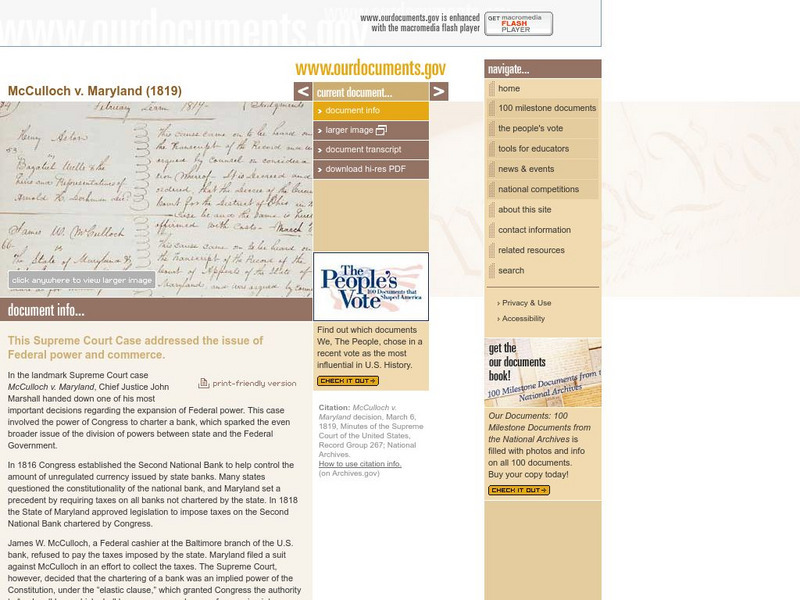
Our Documents: Mc Culloch v. Maryland
Learn about this landmark Supreme Court case on the issues of federal power and commerce. Provides an image of a document from the case files and a transcript of the opinion delivered in 1819 by Chief Justice John Marshall.