Hi, what do you want to do?






Alabama Learning Exchange
Alex: Tad the Tadpole
Tad the Tadpole is designed to demonstrate how pollution in various areas affects wildlife in their native habitats. The lesson is designed to stress the importance of conservation for animals and their surrounding environment. Upon...
Society for Science and the Public
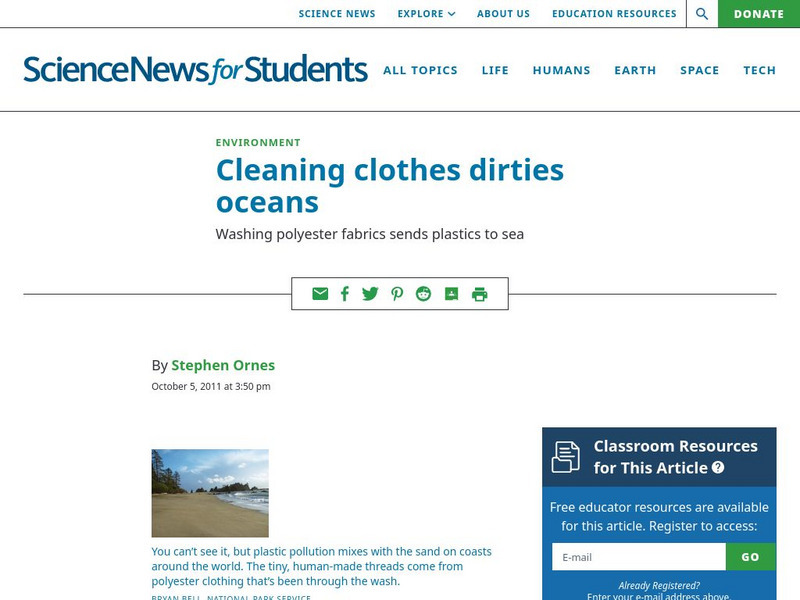
Science News for Students: Cleaning Clothes Dirties Oceans
Describes research into the pollution caused by plastics that are hidden in the fibers of synthetic clothing, and eventually end up in the ocean after laundering. Cites other research that discovered plastic pellets found throughout the...
Encyclopedia of Earth
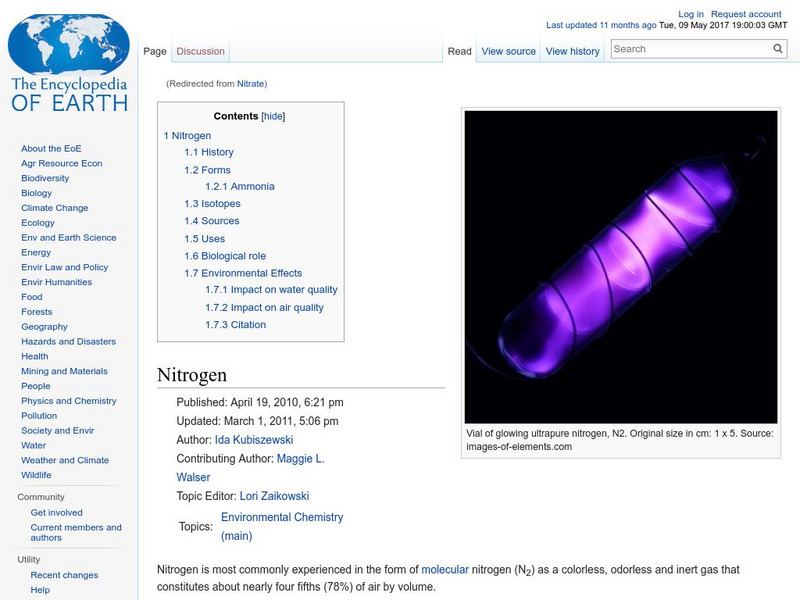
Encyclopedia of Earth: Physics & Chemistry: Nitrate
Discusses the chemistry of nitrate, the negative agricultural effects of too much nitrate in soil and in water sources, its toxicity to plants and livestock, and the impact on human health.
US Environmental Protection Agency
Epa: Secret of Bog Creek
This site has a user guided story about a bog that has been a secret dumping ground for waste.

Other
Save Our Seas Organization: Home Page
Home page of the Save Our Seas Organization which seeks to protect all the oceans of the world.
NOAA
Noaa: Estuaries 101 Curriculum: Estuary and the Watershed San Francisco Bay
In this activity, students investigate a large watershed, look for sources of pollution in the watershed, and study the impacts of a rain storm on a watershed and estuary, without going on a field trip. Students investigate the nature of...
Other
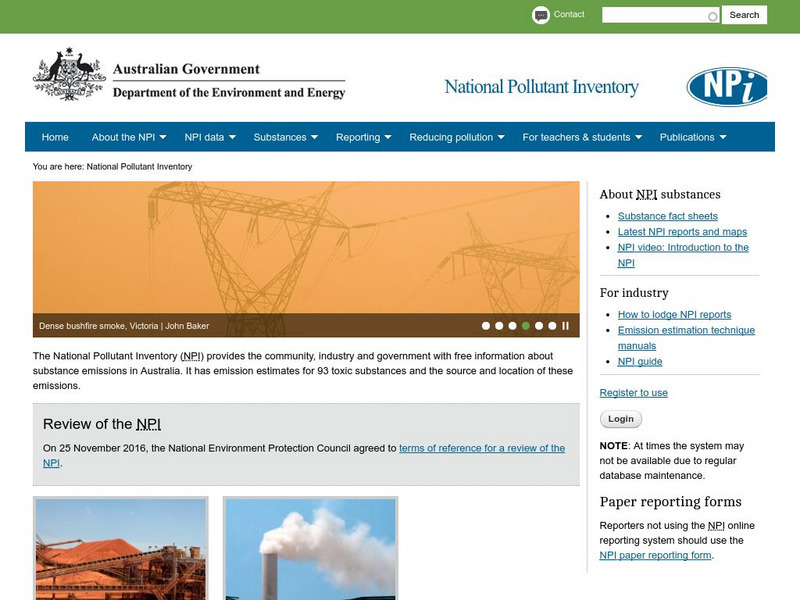
National Pollutant Inventory: Background Information
This site focuses on water and air pollution in Australia, with a brief mention of sea breezes.
US Environmental Protection Agency
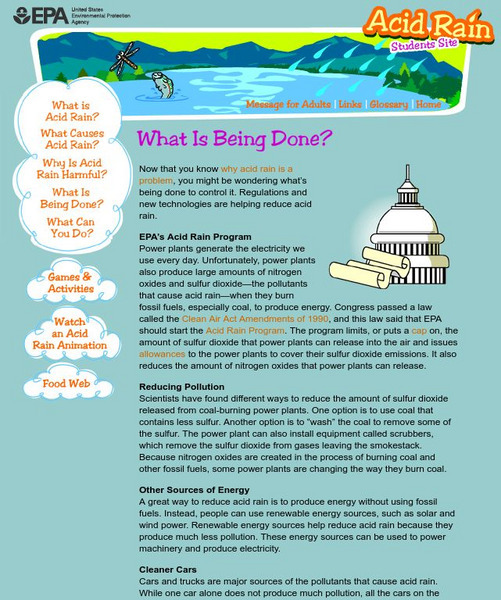
Epa: Acid Rain: What Is Being Done?
The EPA discusses the actions the government agencies are taking to reduce acid rain.
American Institute of Biological Sciences
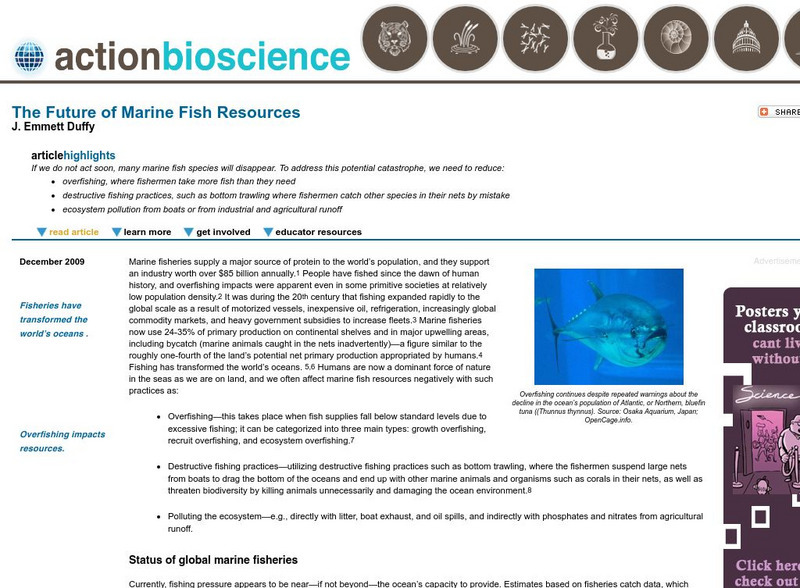
Action Bioscience: The Future of Marine Fish Resources
An article and supporting resources address the potential of fish populations significantly decreasing with overfishing, careless fishing, and pollution from nautical vessels and runoffs.
eSchool Today
E School Today: Your Cool Basics on Ocean Acidification
Looks at ocean acidification, what causes it, the impact of it, and possible ways to reduce it.
US Environmental Protection Agency
Epa: Build Your Own Watershed
How can you learn to build your own watershed? This site features an activity to illustrate the basic properties of a watershed. Don't miss out.
NOAA
Noaa: Estuaries 101 Curriculum: Nutrients in an Estuary
An overload of nutrients, called eutrophication (Greek for "good-nutrition"), can be harmful to estuaries. This phenomenon is also referred to as "over-enrichment," or "nutrient pollution". Students will investigate the range of...
NOAA
Noaa: Century's Top Weather, Water and Climate Events
Discover what experts view as the top weather related events of the 20th century, get background information on them and see photos. Some of the events covered are the Galveston Hurricane of 1900, the 1930s Dust Bowl, Hurricanes Camille...

US Environmental Protection Agency
Epa: Envirofacts Data Warehouse
Using zip codes, this site allows students to locate businesses in their communities that are producing wastes.
Other
University of New Hampshire: Contaminated Sediments Center
This site provides links to descriptions of various environmental research projects being done to develop the best methods for treating different types of contaminated sediments.
National Institutes of Health
National Institute of Environmental Health Services: Lead Poisoning
This comprehensive resource explains everything from the characteristics of a lead atom to symptoms of lead poisoning.
Read Works
Read Works: A Day to Celebrate Earth
[Free Registration/Login Required] Students read about Earth Day and ways students can help the Earth. A question sheet is available to help students build skills in author's purpose.