Hi, what do you want to do?





PBS
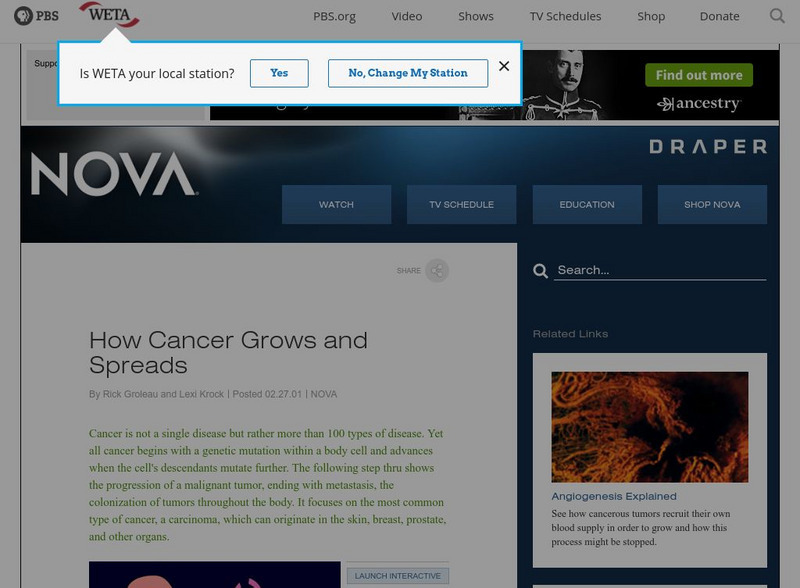
Nova: Cancer Warrior
Animations of the different phases of cancer, make this a great resource for understanding the development of this disease.
PBS
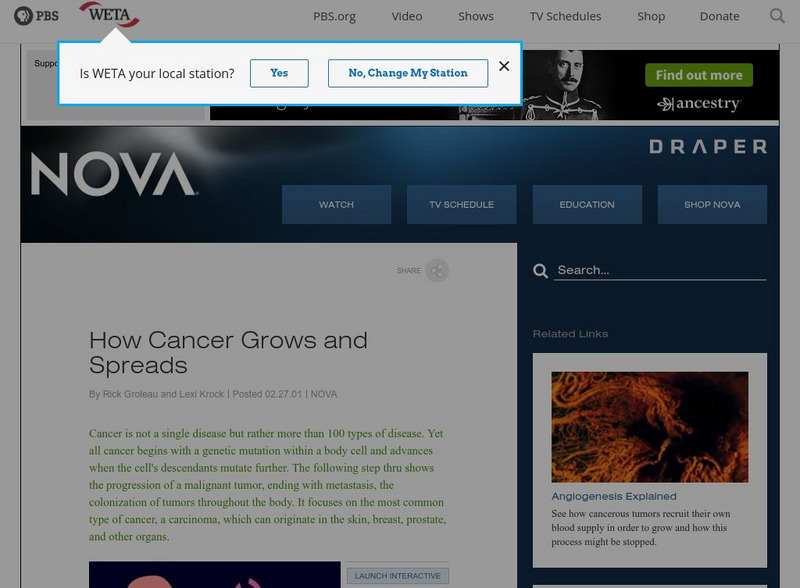
Pbs Teachers: Cancer Warrior: How Cancer Grows
Follow the progression of a malignant tumor, beginning with the first mutation within a cell and ending with metastasis, the colonization of related tumors throughout the body.
PBS
Pbs Nova Teachers: Dying to Be Thin: Body Needs
Find out what the human body needs to function at its best, and why.
PBS
Pbs Nova: Relativity and the Cosmos
This well-written explanation of relativity includes animations and pictures which may be helpful in understanding a tough topic.
![Kqed: Quest: Education: Media Making Toolkit [For the Science Classroom] Website](https://content.lessonplanet.com/knovation/original/246841-d486db05b9554a6d83889d2481c68ebc.jpg?1661803394 "Kqed: Quest: Education: Media Making Toolkit [For the Science Classroom] Website")
PBS
Kqed: Quest: Education: Media Making Toolkit [For the Science Classroom]
A comprehensive guide to integrating media-making into a science classroom provides an engaging way for students to demonstrate knowledge and build 21st-century learning skills. Supplies tools for teachers to make science-based media,...
PBS
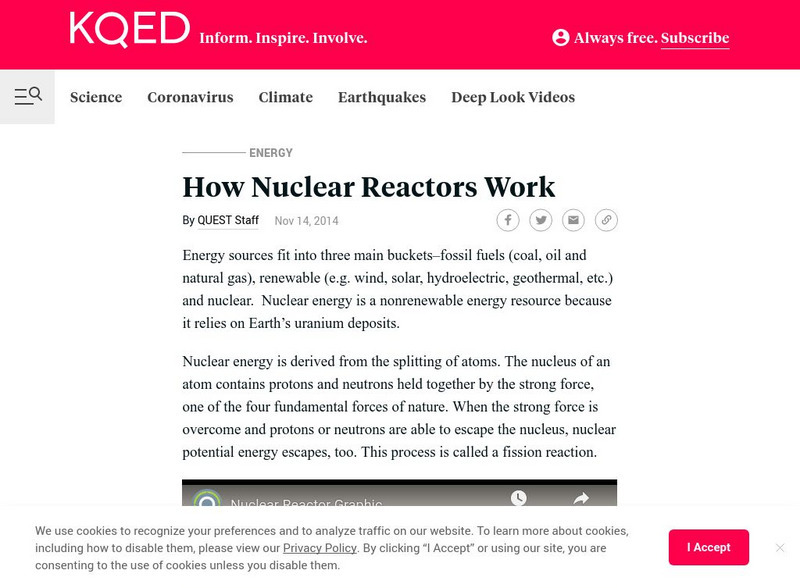
Kqed: Quest: How Nuclear Reactors Work
This interactive explorer allows students to click on a hot spot on the image and learn more about how nuclear reactors work.
PBS
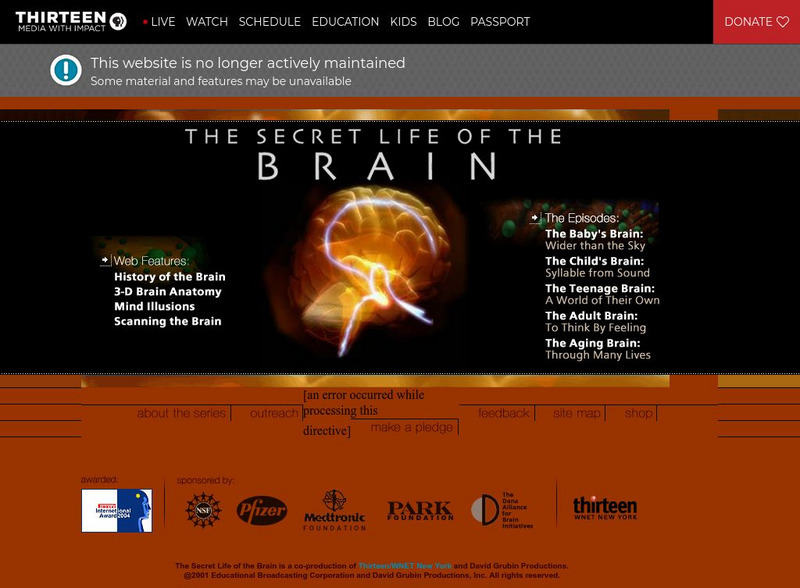
Wnet: Thirteen: The Secret Life of the Brain
This PBS special explores the brain from birth to old age. Take a look at snapshots of brain development at birth, as a child, as a teenager, as an adult, and in old age.

PBS
Wnet: Thirteen: New York: A Documentary Film Online
This is the companion site to the television series on New York that covers "nearly 400 years and 400 square miles" of a "dynamic city that has played an unparalleled role in shaping the nation."

PBS
Wnet: Thirteen: Slavery and the Making of America: Slave Religion
What religions did slaves bring from Africa to America? This PBS series site provides the historical overview of how early African Americans preserved African spiritual beliefs and practices while enslaved, converted to Christianity, and...
PBS
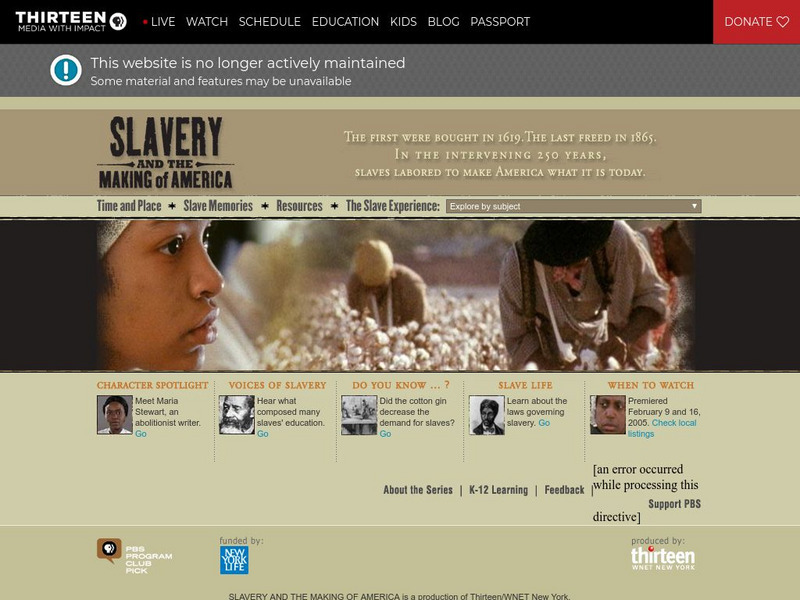
Wnet: Thirteen: Slavery & the Making of America
Using primary documents, oral histories, and other historical resources, discover how the arts of Africa, Europe, and pre-Civil War America influenced the culture of enslaved African Americans.

PBS
Wnet: Thirteen: Freedom: A History of Us: Wake Up, America!
This resource covers the changing of America due to the Industrial Revolution which brought in not only new technology but also opened the door to reform movements. From the series by Joy Hakim, "A History of Us." Includes a teacher's...
PBS
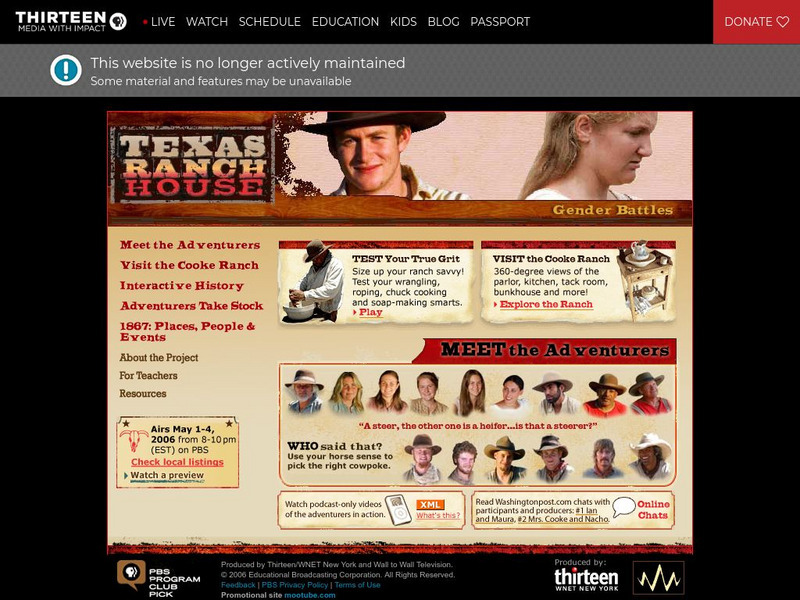
Wnet: Thirteen: Texas Ranch House
What was it like to be a cowboy in 1867? Visit the Cooke Ranch and explore a cowboy's working and dwelling quarters. Play the interactive games to learn about the many aspects of daily life in the American West. (Click "Interactive...
PBS
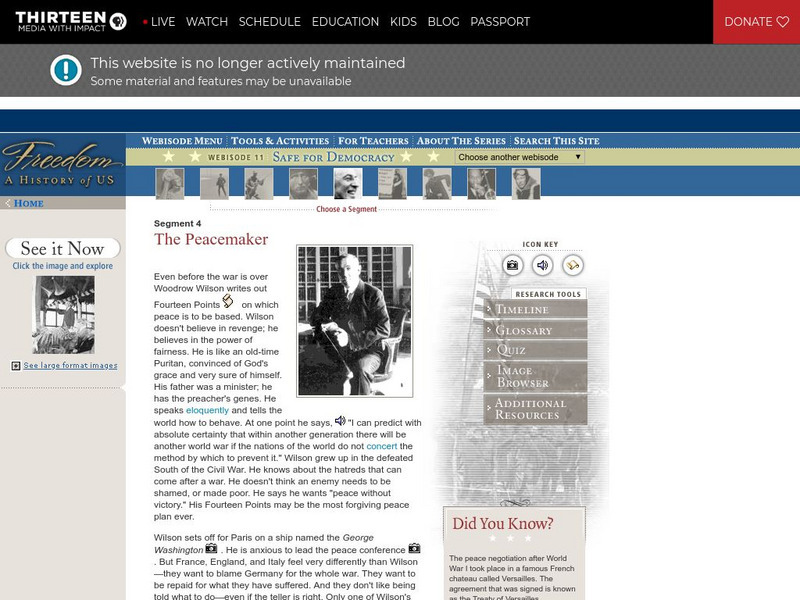
Wnet: Thirteen: Freedom: A History of Us: The Peacemaker
Find a document containing President Wilson's plan for peace after World War I, known as his Fourteen Points, as well as photographs with captions, and the audio of one of his speeches in which he lays out his ideas and garners support...
PBS
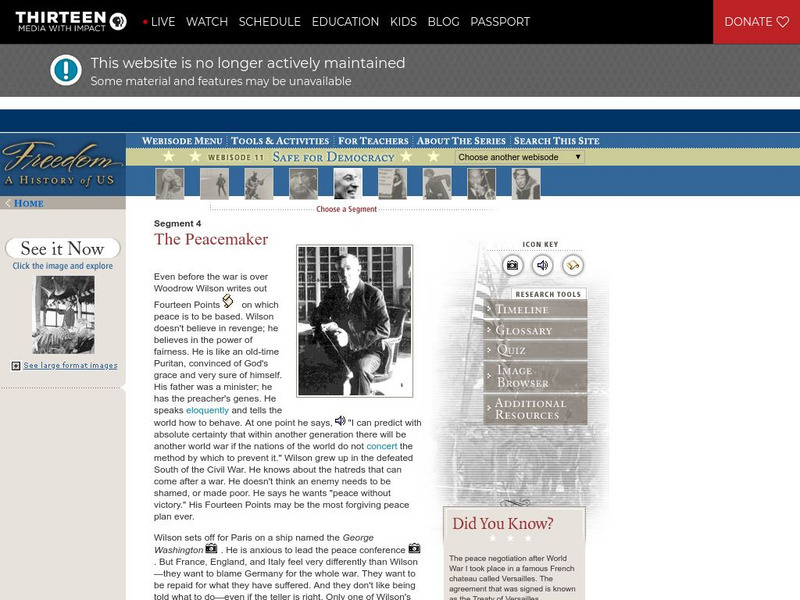
Wnet: Thirteen: Freedom: A History of Us: The Peacemaker
Explore how President Wilson, in his Fourteen Points, urged peace without revenge European self-determination, and the establishment of a peace-keeping League of Nations politicians both abroad and at home rejected his plans.
PBS
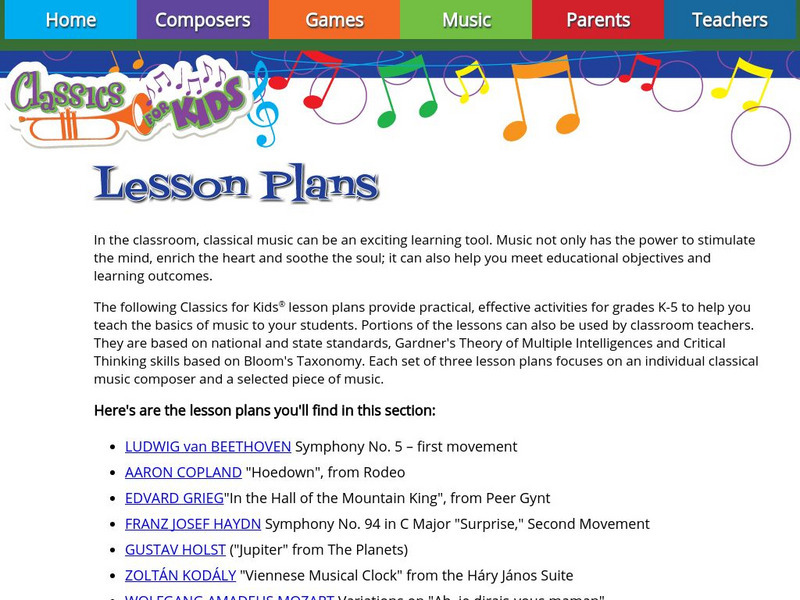
Classics for Kids: Lesson Plans
Teach the basics of classical music to your students with this collection of lesson plans. Study a classical music composer and a selected piece of music with these lesson plans that are based on national and state standards.
PBS
Pbs Kids: Dragonfly Tv Try This!
A collection of simple experiments your students will enjoy! Each activity only requires a few household items, and will certainly spark the creativity in young scientists!
PBS
Pbs Kids
This resource provides activities in art, literature, social studies, science, music and more. PBS kids primarily focuses on early elementary children, K-2.
PBS
Zoom: Kitchen Chemistry
Did you know that chemistry can be found in your kitchen? Enter this amazing virtual world where your first stop is to the kitchen. Locate the clues and move on to the Lab Journal where you can test each item in two experiments: Cabbage...
PBS
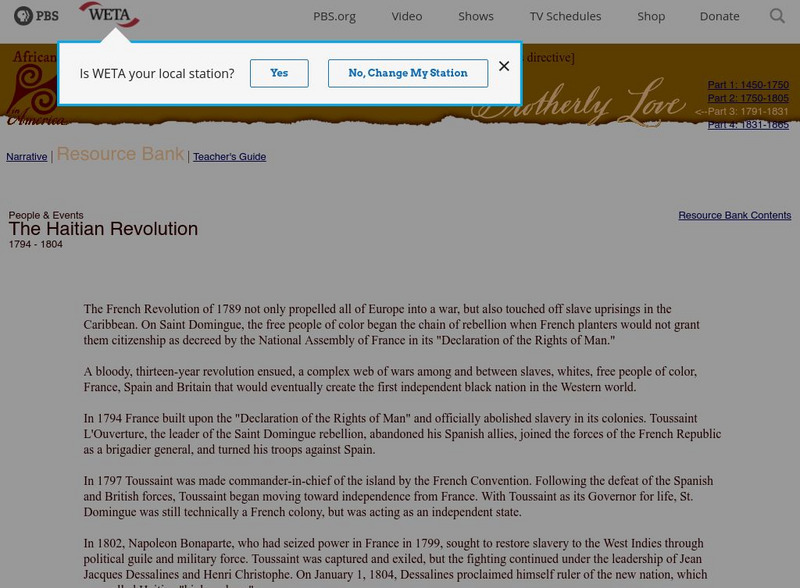
Pbs: Africans in America the Haitian Revolution
This site, which tells of L'Ouverture's role in the revolution, is part of a larger PBS documentary on Africans in America. Included are a teacher's guide and a narrative of the topic. Also, make sure to use the links at the bottom of...

PBS
Pbs Learning Media: Tornado
Students are asked to explain how a tornado is formed and what a tornado does.
PBS
Pbs Learning Media: Poverty
Poverty shows children in unclean conditions and asks your student to write a description of what they think life is like for these children.
PBS
Pbs Learning Media: One Party
This video segment from Wide Angle describes the communist Workers' Party of Korea, the ruling party of North Korea.
PBS
Pbs Learning Media: Percent as a Means to Compare Fractions
In this Cyberchase video segment, the CyberSquad uses fractions and percents to compare the contest results of the Squitters, little creatures who love to jump.
PBS
Pbs Learning Media: Multiplying Bigger Numbers
In this video segment from Cyberchase, Inez, Jackie and Digit use multiplication to keep track of the number of clones.